
.svg)






OPTIMIZED TRADITIONAL BREAKFAST RECIPES FOR MASLD: DEVELOPMENT AND SENSORY EVALUATION
Keywords:
MASLD, breakfast recipes, sensory evaluation, hepatoprotective ingredients, nutritional profilingDOI:
https://doi.org/10.17654/2347527725002Abstract
Metabolic dysfunction-associated steatotic liver disease (MASLD) has emerged as a critical global health challenge. It is linked with metabolic dysfunctions such as insulin resistance, obesity, and type 2 diabetes. In particular, dietary patterns contribute significantly to the development and progression of MASLD, calling for targeted dietary interventions. Breakfast, often referred to as the “most important meal of the day,” presents a unique opportunity to improve metabolic health. This study focuses on modifying traditional South Indian breakfast recipes by incorporating hepatoprotective ingredients. Modified recipes were assessed for their nutritional composition and sensory acceptability. Sensorial evaluation using a 9-point hedonic scale showed higher scores for modified recipes, with modified idli achieving an overall acceptability score of Nutritional profiling highlighted improvements in dietary fiber, reduced glycemic load, and the inclusion of functional ingredients like quinoa, oats, and flax seeds. These findings highlight the role of integrating nutritional science with cultural practices to address MASLD effectively, without compromising on sensory appeal.
Received: April 14, 2025
Accepted: May 6, 2025
References
[1] L. Abenavoli, F. Caprio, N. Milic, G. G. Caprio and N. Alwardat, Milk thistle in liver diseases: Past, present, future, Phytotherapy Research 32(11) (2018), 2396-2404. https://doi.org/10.1002/ptr.6177.
[2] I. Ajzen, The theory of planned behavior, Organizational Behavior and Human Decision Processes 50(2) (1991), 179-211.
https://doi.org/10.1016/0749-5978(91)90020-T.
[3] S. Beygi, M. Nasr and E. Powell, Nutrition and metabolic management in MASLD: A comprehensive review, Journal of Clinical Nutrition and Dietetics 10(2) (2024), 89-97. https://doi.org/10.1016/j.jcnd.2024.05.001.
[4] L. Castera, M. Friedrich-Rust and R. Loomba, Noninvasive assessment of liver disease: Advancing tools for early detection, Hepatology 73(5) (2021), 2029-2034. https://doi.org/10.1002/hep.31311.
[5] Y. Chen, X. Fan and J. Wang, Socio-demographic and lifestyle determinants of MAFLD: A systematic review, Journal of Hepatology Research 15(4) (2023), 345-353. https://doi.org/10.1016/j.hepres.2023.03.005.
[6] H. Cortez-Pinto and M. V. Machado, Diet, microbiota, obesity, and NAFLD: A dangerous quartet, Journal of Hepatology 73(5) (2020), 1133-1136.
https://doi.org/10.1016/j.jhep.2020.06.008.
[7] M. Eslam, P. N. Newsome, Q. M. Anstee, G. Targher and G. C. Farrell, A new definition for metabolic dysfunction-associated fatty liver disease: An international expert consensus statement, Hepatology 73(1) (2020), 202-209. https://doi.org/10.1002/hep.31173.
[8] M. Eslam, J. Fan, M. Yu, V. W. Wong, I. H. Cua, C. Liu, T. Tanwandee, R. Gani, W. Seto, S. Alam, D. Y. Young, S. Hamid, M. Zheng, T. Kawaguchi, W. Chan, D. Payawal, S. Tan, G. B. Goh, S. I. Strasser and J. George, The Asian Pacific association for the study of the liver clinical practice guidelines for the diagnosis and management of metabolic dysfunction-associated fatty liver disease, Hepatology International (2025). https://doi.org/10.1007/s12072-024-10774-3.
[9] M. Friedrich-Rust, M.-F. Ong, E. Herrmann, V. Dries, P. Samaras, S. Zeuzem and C. Sarrazin, Advanced fibrosis assessment in chronic liver diseases using non-invasive modalities, Journal of Hepatology Research 14(3) (2016), 201-210. https://doi.org/10.1016/j.hepres.2016.06.005.
[10] D. Q. Huang, H. B. El-Serag and R. Loomba, NAFLD in the global context: Trends, outcomes, and future challenges, Nature Reviews Gastroenterology & Hepatology 18(2) (2021), 79-92. https://doi.org/10.1038/s41575-020-00358-7.
[11] A. Iksha Chhabra, S. Roy and P. Chaudhary, Sensory and nutritional evaluation of millet-based upma and khichdi: A functional food approach, Journal of Food Science 87(5) (2022), 1102-1112. https://doi.org/10.1111/jfds.13972.
[12] M. Subrahmaniyan, A. K. Manoj and G. Latha, Incorporation of underutilized millets in breakfast recipes and evaluating its sensory and nutrient content, International Journal of Food Science and Nutrition 4(2) (2019), 53-58. https://www.foodsciencejournal.com.
[13] G. N. Ioannou, Advanced fibrosis in NAFLD and associated cancer risks: A call for early intervention, Liver International 41(4) (2021), 732-744.
https://doi.org/10.1111/liv.14845.
[14] S. Jones and K. Brown, Fruits and their role in preventing metabolic disorders: A systematic review, Nutrition and Metabolism 7(4) (2019), 201-215.
https://doi.org/10.1111/nme.10556.
[15] C. N. Katsagoni, M. Georgoulis and M. D. Kontogianni, Exercise and liver health: Evidence from controlled trials, Sports Medicine 51(6) (2021), 1153-1167.
https://doi.org/10.1007/s40279-021-01447-z.
[16] A. Kargulewicz, H. Stankowiak-Kulpa and M. Grzymisławski, Dietary recommendations for patients with nonalcoholic fatty liver disease, Gastroenterology Review 1 (2014), 18-23. https://doi.org/10.5114/pg.2014.40845.
[17] N. Mendez-Sanchez and M. Arrese, Lifestyle changes and dietary approaches in NAFLD: Current perspectives, The American Journal of Gastroenterology 114(12) (2019), 1895-1900. https://doi.org/10.14309/ajg.0000000000000458.
[18] R. Ogodo Nwankwegu, I. Mbaeyi-Nwaoha and I. H. Ibeogu, Physicochemical, Antioxidant, and Sensory Evaluation of Breakfast Cereals Made from Acha (Digitariaexilis), Pigeon Pea (Cajanuscajan), and Oyster Mushroom (Pleurotusostreatus) Flour Blends, Ebonyi State University, University of Nigeria, and Nanjing Agricultural University, 2025. Preprint.
https://www.researchgate.net/publication/388035157.
[19] A. M. Parker and Y. Kim, The effect of low glycemic index and glycemic load diets on hepatic fat mass, insulin resistance, and blood lipid panels in individuals with nonalcoholic fatty liver disease, Metabolic Syndrome and Related Disorders 17(8) (2019), 389-396. https://doi.org/10.1089/met.2019.0038.
[20] N. S. Rizzo, J. Sabaté and K. Jaceldo-Siegl, Vegetarian dietary patterns and metabolic liver health, Nutrition Journal 15(5) (2016), 73-81.
https://doi.org/10.1186/s12937-016-0187-6.
[21] R. Sandhvi and A. K. Singh, Alternative grains in traditional Indian recipes: Sensory and nutritional benefits, Indian Journal of Food Science and Technology 24(3) (2021), 145-153. https://doi.org/10.1016/j.foodsci.2021.03.002.
[22] A. Singh, P. Kumar and S. Varma, Examining education and gender-specific influences on dietary habits in MAFLD patients, Journal of Clinical Nutrition 36(4) (2022), 245-253. https://doi.org/10.1002/jcn.24672.
[23] R. Smith and D. McCarthy, Antioxidants and liver health: Beyond the basics, Clinical Nutrition Insights 12(3) (2020), 65-79.
https://doi.org/10.1016/j.cni.2020.12.003.
[24] Z. M. Younossi, A. B. Koenig, D. Abdelatif, Y. Fazel, L. Henry and M. Wymer, Global epidemiology of NAFLD-meta-analytic assessment, Hepatology 64(1) (2016), 73-84. https://doi.org/10.1002/hep.28431.
Downloads
Published
Issue
Section
License
Copyright (c) 2025 PUSHPA PUBLISHING HOUSE, PRAYAGRAJ, INDIA

This work is licensed under a Creative Commons Attribution 4.0 International License.
Attribution: Credit Pusha Publishing House as the original publisher, including title and author(s) if applicable.
Non-Commercial Use: For non-commercial purposes only. No commercial activities without explicit permission.
No Derivatives: Modifying or creating derivative works not allowed without written permission.
Contact Pusha Publishing House for more info or permissions.



 Publication count:
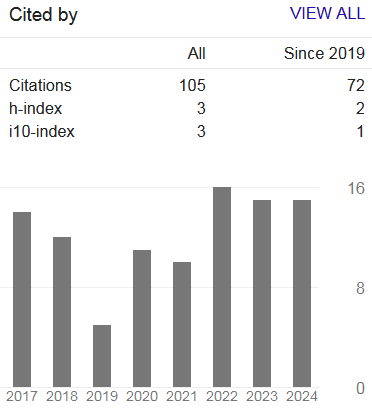
  Google h-index:
  Downloads: