
MINIMIZING A WEIGHTED BARRIER FUNCTION SUBJECT TO SECOND-ORDER CONE AND LINEAR EQUALITY CONSTRAINTS
Keywords:
second-order cone constraints, weighted barrier function, Newton’s methods, second-order cone programmingDOI:
https://doi.org/10.17654/0975045225017Abstract
This work concerns minimizing a weighted barrier function subject to a system of second-order cone constraints and linear equality constraints. For a given weight vector, the related barrier function is minimized using Newton’s method. We apply both quadratic interpolation and backtracking line searches. A starting point for the process is not required. A starting point is found initially as a solution to the linear system. Then, the Dmax constraint consensus method is applied to find an interior feasible point from the initial starting point. We use numerical experiments on randomly generated problems to investigate the method’s effectiveness in minimizing the weighted barrier function.
Received: April 1, 2025
Accepted: May 24, 2025
References
[1] F. Aghili, Optimal control of legged-robots subject to friction cone constraints, Accessed 29 September, 2023. https://arxiv.org/abs/2208.02393
[2] M. Andersen, J. Dahl and L. Vandenberghe, CVXOPT - cone programming, Accessed 23 July 2023. http://cvxopt.org/userguide/coneprog.html.
[3] C. Barta, M. Kolar and J. Sustek, On Hessians of composite functions, Appl. Math. Sci. 8(172) (2014), 8601-8609.
[4] D. Bertsimas and N. Johnson, Compressed sensing: a discrete optimization approach, Optimization Online, 2023.
https://optimization-online.org/2023/06/compressed-sensing-a-discrete-optimization-approach/.
[5] P. H. Borgstrom, M. A. Batalin, G. S. Sukhatme and W. J. Kaiser, Weighted barrier functions for computation of force distributions with friction cone constraints, 2010 IEEE International Conference on Robotics and Automation, Anchorage Convention District May 3-8, 2010, Anchorage, Alaska, USA, 2010.
[6] S. Boyd and L. El Ghaoui, Method of centers for minimizing generalized eigenvalues, Linear Algebra Appl. 188 (1993), 63-111.
[7] R. Burden and D. Faires, Numerical Analysis, 9th ed., Addison Wesley, 2011.
[8] M. M. Chowdhury, B. D. Biswas and S. Kamalasadan, Second-order cone programming (SOCP) model for three phase optimal power flow (OPF) in active distribution networks, IEEE Transactions on Smart Grid 14(5) (2023), 3732-3743.
[9] B. Dawuda, S. Jibrin and I. Abdullahi, A weighted analytic center for second-order cone constraints, Appl. Comput. Math. 10(6) (2021), 146-155.
[10] N. Goldberg and S. Leyffer, An active-set method for second-order conic-constrained quadratic programming, SIAM J. Optim. 25(3) (2015), 1455-1477.
[11] L. Han, J. C. Trinkle and Z. Li, Grasp analysis as linear matrix inequality problems, IEEE Transactions on Robotics and Automation 16(6) (2000), 663-674.
[12] W. Jia, T. Ding and M. Shahidehpour, Second-order cone programming for data driven fluid and gas energy flow with a tight reformulation, IEEE Transactions on Power Systems 36(2) (2021), 1652-1655.
[13] S. Jibrin and I. Abdullahi, Conjugate gradient methods for computing weighted analytic center for linear matrix inequalities under exact and quadratic interpolation line searches, American Journal of Applied Mathematics 8(1) (2020), 1-10.
[14] X. Luo and A. Wächter, A quadratically convergent sequential programming method for second-order cone programs capable of warm starts, Optimization Online, 2022. https://optimization-online.org/2022/07/8978/.
[15] J. Machacek and S. Jibrin, An interior point method for solving semidefinite programs using cutting planes and weighted analytic centers, J. Appl. Math. 2012 (2012), Article ID 946893, 21 pp.
[16] R. D. C. Monteiro and T. Tsuchiya, Polynomial convergence of primal-dual algorithms for the second-order cone program based on the MZ-family of directions, Math. Program. 88 (2000), 61-83.
[17] Z. Salleh and A. Alhawarat, An efficient modification of the Hestenes-Stiefel nonlinear conjugate gradient method with restart property, J. Inequal. Appl. 2016(1) (2016), Article 110, 14 pp.
[18] G. Sonnevend, New algorithms in convex programming based on a notion of ‘centre’ (for systems of analytic inequalities) and on rational extrapolation, Internat. Ser. Numer. Math. 84 (1988), 311-326.
[19] R. J. Vanderbei and H. Yurttan, Using LOQO to solve second-order cone programming problems, Technical Report SOR-98-09, Statistics and Operations Research, Princeton University, 1998.
[20] L. Vandenberghe, S. Boyd, H. Lebret and M. S. Lobo, Applications of second-order cone programming, Linear Algebra Appl. 284 (1998), 193-228.
[21] L. Vandenberghe and S. Boyd, Convex Optimization, Cambridge University Press, New York, 2004.
[22] L. Vandenberghe and S. Boyd, Semidefinite programming, SIAM Rev. 38 (1996), 49-95.
[23] A. Weigandt, K. Tuthill and S. Jibrin, Constraint consensus methods for finding interior feasible points in second-order cones, J. Appl. Math. 2010 (2010), Article ID 307209, 19 pp.
[24] Wikipedia, Second order cone programming, Wikimedia Foundation, 19 July 2023. https://en.wikipedia.org/wiki/Second-order_cone_programming.
[25] Q. Zhao, W. Fu and Z. Chen, A sensitivity result for quadratic second-order cone programming and its application, Appl. Math. 66 (2021), 413-436.
Downloads
Published
Issue
Section
License
Copyright (c) 2025 PUSHPA PUBLISHING HOUSE, PRAYAGRAJ, INDIA

This work is licensed under a Creative Commons Attribution 4.0 International License.
Attribution: Credit Pushpa Publishing House as the original publisher, including title and author(s) if applicable.
Non-Commercial Use: For non-commercial purposes only. No commercial activities without explicit permission.
No Derivatives: Modifying or creating derivative works not allowed without written permission.
Contact Pushpa Publishing House for more info or permissions.





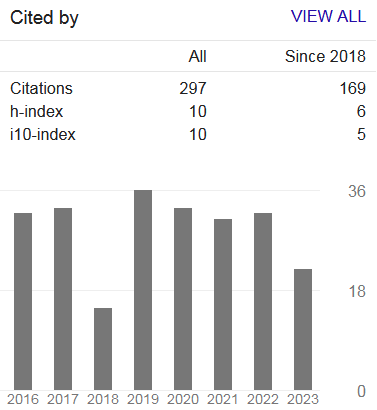
 Citation count:
  Google h-index:
  Downloads: