


.svg)






EVALUATING NUTRITIONAL EFFECTS IN TWO GROUPS OF PET DOGS USING AN UNEQUAL-VARIANCE t-TEST WITH IMPRECISE DATA
Keywords:
t-test, population, sample size, inference, uncertaintyDOI:
https://doi.org/10.17654/0973514326003Abstract
The existing t-test under classical statistics is used when all observations in the data are determinate. In case of uncertain and imprecise observations, the existing t-test cannot be applied. In this paper, a t-test for two populations when variances are unknown and unequal in practice will be introduced when the data has imprecise observations. The test statistic will be introduced for imprecise observations. The testing procedure of the proposed t-test will be discussed considering the degree of uncertainty. The applications of the proposed t-test will be discussed using pet dogs fed data. From the data analysis, the proposed t-test was found to be more informative than the existing t-test under classical statistics.
Received: November 24, 2025
Revised: December 12, 2025
Accepted: December 20, 2025
References
[1] M. Kebalepile and P. M. Chakane, Commonly used statistical tests and their application, Southern African Journal of Anaesthesia and Analgesia 28 (2022), 580-584.
[2] Y.-C. Feng, Y.-C. Huang and X.-M. Ma, The application of student’s t-test in internal quality control of clinical laboratory, Frontiers in Laboratory Medicine 1 (2017), 125-128.
[3] P. Mishra, U. Singh, C. M. Pandey, P. Mishra and G. Pandey, Application of student’s t-test, analysis of variance, and covariance, Annals of Cardiac Anaesthesia 22 (2019), 407-411.
[4] H.-Y. Kim, Statistical notes for clinical researchers: the independent samples t-test, Restorative Dentistry and Endodontics 44(3) (2019), e26.
https://doi.org/10.5395/rde.2019.44.e26.
[5] Y. Al Zaim and A. AlAita, On the mathematical expectation of the sample variance in simple sampling technique, SCOPUA Journal of Applied Statistical Research 1 (2025), 1-9. https://doi.org/10.64060/JASR.v1.i2.3.
[6] R. M. Neto and A. Ostrensky, Assessment of the use of statistical methods in articles published in a journal of veterinary science from 2000 to 2010, Acta Scientiarum : Technology 35 (2013), 97-102.
[7] A. Madouasse, S. Nusinovici, P. Monestiez, P. Ezanno and A. Lehébel, Statistical methods in veterinary epidemiology, Journal de la Société Française de Statistique 157 (2016), 153-181.
[8] J. Palarea-Albaladejo and I. McKendrick, Best practice for the design and statistical analysis of animal studies, The Veterinary Record 186 (2020), 59.
[9] M. Gizzarelli, S. Calabrò, A. Vastolo, G. Molinaro, I. Balestrino and M. I. Cutrignelli, Clinical findings in healthy dogs fed with diets characterized by different carbohydrates sources, Frontiers in Veterinary Science 8 (2021), 667318.
[10] S. K. Piper, D. Zocholl, U. Toelch, R. Roehle, A. Stroux, J. Hoessler, A. Zinke and F. Konietschke, Statistical review of animal trials - a guideline, Biom. J. 65 (2023), 2200061.
[11] I. Lean, A. Rabiee, T. Duffield and I. Dohoo, Invited review: Use of meta-analysis in animal health and reproduction: methods and applications, Journal of Dairy Science 92 (2009), 3545-3565.
[12] M. Roberts, E. Bermingham, N. Cave, W. Young, C. McKenzie and D. Thomas, Macronutrient intake of dogs, self-selecting diets varying in composition offered ad libitum, Journal of Animal Physiology and Animal Nutrition 102 (2018), 568-575.
[13] K. Kazimierska, W. Biel, R. Witkowicz, J. Karakulska and X. Stachurska, Evaluation of nutritional value and microbiological safety in commercial dog food, Veterinary Research Communications 45 (2021), 111-128.
[14] S. Hoummady, M. Fantinati, D. Maso, A. Bynens, D. Banuls, N. Santos, M. Roche and N. Priymenko, Comparison of canine owner profile according to food choice: an online preliminary survey in France, BMC Veterinary Research 18 (2022), 163.
[15] S. Dodd, D. Khosa, C. Dewey and A. Verbrugghe, Owner perception of health of North American dogs fed meat-or plant-based diets, Research in Veterinary Science 149 (2022), 36-46.
[16] F. Smarandache, Introduction to Neutrosophic Statistics, Sitech and Education Publisher, Craiova, Romania-Educational Publisher, Columbus, Ohio, USA, Vol. 123, 2014.
[17] F. Smarandache, Neutrosophic Statistics is an extension of Interval Statistics, while plithogenic statistics is the most general form of statistics (second version), Vol. 2, Infinite Study, 2022.
[18] J. Chen, J. Ye and S. Du, Scale effect and anisotropy analyzed for neutrosophic numbers of rock joint roughness coefficient based on neutrosophic statistics, Symmetry 9 (2017), 208.
[19] J. Chen, J. Ye, S. Du and R. Yong, Expressions of rock joint roughness coefficient using neutrosophic interval statistical numbers, Symmetry 9 (2017), 123.
[20] R. Alhabib and A. Salama, The neutrosophic time series-study its models (linear-logarithmic) and test the coefficients significance of its linear model, Neutrosophic Sets and Systems 33 (2020), 105-115.
[21] A. Polymenis, A neutrosophic Student’s t-type of statistic for AR(1) random processes, Journal of Fuzzy Extension and Applications 2 (2021), 388-393.
[22] A. AlAita and M. Aslam, Analysis of covariance under neutrosophic statistics, J. Stat. Comput. Simul. 93 (2022), 1-19.
[23] M. Aslam, Neutrosophic F-test for two counts of data from the Poisson distribution with application in climatology, Stats 5 (2022), 773-783.
[24] R. Khali, A. AlAita and Y. A. Zai, The exact analysis of augmented incomplete Latin square design with one missing observation, SCOPUA Journal of Applied Statistical Research 1 (2025), 1-14. https://doi.org/10.64060/JASR.v1.i2.4.
[25] M. Aslam, R. A. Bantan and N. Khan, Design of tests for mean and variance under complexity-an application to rock measurement data, Measurement 177 (2021), 109312.
[26] S. Parthiban and P. Gajivaradhan, A comparative study of two-sample t-test under fuzzy environments using trapezoidal fuzzy numbers, International Journal of Fuzzy Mathematical Archive 4 (2016), 39-54.
[27] G. K. Kanji, 100 Statistical Tests, Sage, 2006.
Downloads
Published
Issue
Section
License
Copyright (c) 2026 PUSHPA PUBLISHING HOUSE, PRAYAGRAJ, INDIA

This work is licensed under a Creative Commons Attribution 4.0 International License.
_________________________
Attribution: Credit Pushpa Publishing House as the original publisher, including title and author(s) if applicable.
Non-Commercial Use: For non-commercial purposes only. No commercial activities without explicit permission.
No Derivatives: Modifying or creating derivative works not allowed without written permission.
Contact Puspha Publishing House for more info or permissions.

 Journal Impact Factor:

 Publication count: 330
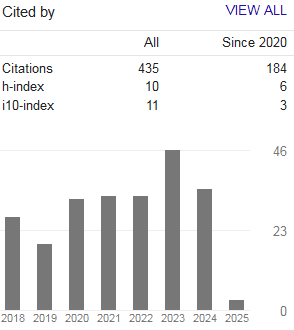
 Google h-index: 10
 Downloads: 87500+