
COMBINATION OF PERTURBATION AND TAYLOR SERIES EXPANSIONS FOR SOLVING MATHEMATICAL MODEL OF CARDIOVASCULAR-RESPIRATORY SYSTEM
Keywords:
perturbation iteration, Taylor expansions, algorithm, mathematical model, cardiovascular/respiratory system, numerical simulation resultsDOI:
https://doi.org/10.17654/0975045224006Abstract
This paper aims at testing the efficiency of Algorithm of Combination Perturbation Taylor Expansions (CPTE) compared with Euler method and Matlab approaches to solve mathematical model of cardiovascular-respiratory system. CPTE provides the solution in the form of an infinite series for ordinary differential equation. The numerical simulations carried out using values of determinant parameters of cardiovascular-respiratory system for a 30-year old woman who performed regularly three physical activities (walking, jogging and running fast) provide the results which are in good agreement with experimental data.
Received: November 16, 2023
Accepted: March 9, 2024
References
Y. Aksoy and M. Pakdemirli, New perturbation-iteration solutions for Bratu-type equations, Comput. Math. Appl. 59(8) (2010), 2802-2808.
Theogene Bizimungu, Dominique Harelimana and Jean Marie Ntaganda, A client-server and web-based graphical user interface design for the mathematical model of cardiovascular-respiratory system, Applied Computational Intelligence and Soft Computing 2021 (2021), Article ID 5581937, 11 pp.
https://doi.org/10.1155/2021/5581937.
L. Cheng, O. Ivanova, H. H. Fan and M. C. K. Khoo, An integrative model of respiratory and cardiovascular control in sleep-disordered breathing, Respir. Physiol. Neurobiol. 174 (2010), 4-28.
K. Hemalatha and M. Manivannan, Cardiopulmonary model to study interaction hemodynamics in Muller maneuver, Int. J. Numer. Meth. Biomed. Engng. 27 (2011), 1524-1544.
R. L. Hester, A. J. Brown, L. Husband, R. Iliescu, D. Pruett, R. L. Summers and T. G. Coleman, HumMod: a modeling environment for the simulation of integrative human physiology, Front Physiol. 2 (2011), 12.
F. S. Grodins, Integrative cardiovascular physiology: a mathematical synthesis of cardiac and blood vessel hemodynamics, Q. Rev. Biol. 34 (1959), 93-116.
F. S. Grodins, J. S. Gray, K. R. Schroeder, A. L. Norins and R. W. Jones, Respiratory responses to CO2 inhalation: a theoretical study of nonlinear biological regulator, J. Appl. Physiol. 7 (1954), 283-308.
A. C. Guyton, T. G. Coleman and H. J. Granger, Circulation: overall regulation, Annu. Rev. Physiol. 34 (1972), 13-46.
E. Magosso and M. Ursino, A mathematical model of CO2 effect on cardiovascular regulation, Am. J. Physiol. Heart Circ. Physiol. 281(5) (2001), H2036-H2052. doi: 10.1152/ajpheart.2001.281.5.H2036. PMID: 11668065.
Jean Marie Ntaganda and Benjamin Mampassi, Modelling blood partial pressures of the human cardiovascular respiratory system, Appl. Math. Comput. 187 (2007), 1100-1108.
Jean Marie Ntaganda, Japhet Niyobuhungiro, Wellars Banzi, Lydie Mpinganzima, Froduald Minani, Jean Bosco Gahutu, Vincent Dusabejambo and Immaculate Kambutse, Mathematical modelling of human cardiovascular-respiratory system responses to exercise in Rwanda, International Journal of Mathematical Modelling and Numerical Optimisation (IJMMNO) 9(3) (2019), 287-308.
M. Pakdemirli, Y. Aksoy and H. Boyaci, A new perturbation-iteration approach for first order differential equations, Math. Comput. Appl. 16(4) (2011), 890-899.
M. Pakdemirli, Review of the perturbation-iteration method, Math. Comput. Appl. 18(3) (2013), 139-151.
S. Timischl, A global model of the cardiovascular and respiratory system, Ph. D. Thesis, Karl-Franzens Universität, Graz, Austria, 1998.
M. Ursino and E. Magosso, Acute cardiovascular response to isocapnic hypoxia. I. A mathematical model, Am. J. Physiol. Heart Circ. Physiol. 279 (2000), H149-H165.
Downloads
Published
Issue
Section
License
Copyright (c) 2024 PUSHPA PUBLISHING HOUSE, PRAYAGRAJ, INDIA

This work is licensed under a Creative Commons Attribution 4.0 International License.
Attribution: Credit Pushpa Publishing House as the original publisher, including title and author(s) if applicable.
Non-Commercial Use: For non-commercial purposes only. No commercial activities without explicit permission.
No Derivatives: Modifying or creating derivative works not allowed without written permission.
Contact Pushpa Publishing House for more info or permissions.





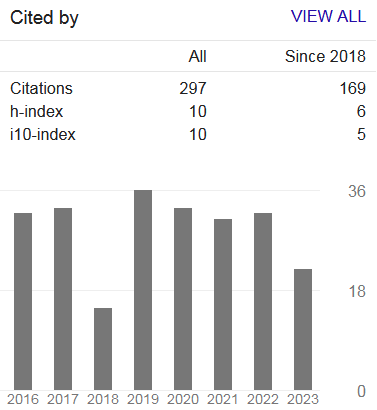
 Citation count:
  Google h-index:
  Downloads: