
AGE-STRUCTURED MODEL WITH DELAY FOR THE STUDY OF SCHISTOSOMIASE IN NIGER
Keywords:
SEIRS model, age-structured, delay, nonlinear integro-differential system, stability, SchistosomiaseDOI:
https://doi.org/10.17654/0975045225015Abstract
In this paper, an age-structured model with delay applied to Schistosomiase in the Republic of Niger is studied. First, the model is formulated using delay differential equations [25]. Then, the basic reproduction number is determined. Once this task is completed, the stability of the disease-free equilibrium point is analyzed. The analytical and numerical results obtained show the stability of the disease-free equilibrium point. Subsequently, by substitution, the endemic equilibrium point is determined. Then, its stability is investigated by using the method of Routh Hurwitz [5, 23, 25]. To do this, the dynamic system reflecting the dynamics of the disease is linearized. Then, the characteristic polynomial of the linearized system is determined. A polynomial depending on the incubation time of the disease is obtained [22, 25]. Afterwards, the stability of the equilibrium point depending on the value of the incubation time is discussed. The analytical and numerical results obtained show that the endemic equilibrium point is stable when the time delay is neglected and it is unstable from certain values of the incubation time. From the analytical and simulation results, we observed that a Hopf bifurcation occurs for a certain value of latency time.
Received: March 18, 2025
Revised: April 24, 2025
Accepted: April 30, 2025
References
Abdennasser Chekroun, Contribution à l’analyse mathématique d’équations aux dérivées partielles structurées en âge et en espace modélisant une dynamique de population cellulaire, Université Claud Bernard Lion 1, Thèse, 2016.
A. M. Oumarou and S. Bisso, Modelling and simulating a transmission of Covid-19 disease: Niger Republic case, Eur. J. Appl. Math. 13(3) (2020), 549-566.
A. M. Haghighi, J.-A. Lian and M. P. Mishev, Advance Mathematics for Engineers with Applications in Stochastic Processes (revised edition), Nova Science Publishers, Inc., New York, NY, 2011.
A. M. Oumarou, S. Bisso and B. Mampassi, Stability analysis and simulation of an age-structured hepatitis B model without vertical transmission, Int. J. Differ. Equ. Appl. 14(1) (2015), 13-41.
Amadou Garba Abdourahamane et al., Structured model in age with delay for the study of some diseases, Int. J. Adv. Appl. Math. and Mech. 11(2) (2023), 1-16.
Alpha Omar Diallo, Modélisation et optimisation du contrôle de l’ancéphalite Japonaise au Cambodge, Thèse, Université de Mont Pellier, 2018.
Derdei Bichara, Étude de modèles épidémiologiques: stabilité, observation et estimation de paramètres, Systmes dynamiques [math.DS], Université de Lorraine, 2013.
Eduardo Pozo Valdiviezo, Une brève étude du nombre de reproduction en épidémiologie et leurs applications, Institute Polytechnique de Paris - Site Ecole Polytechnique, 2020.
Gabriel Obed Fosu, Emmanuel Akweittey and Albert Adu-Sackey, Next-generation matrices and basic reproductive numbers for all phases of the coronavirus disease, Department of Mathematics, Presbyterian University College, Ghana, Open J. Math. Sci. 2020(4) (2020), 261-272.
Alfred Hugo and Emanuel Simanjilo, Analysis of an eco-epidemiological model under optimal control measures for infected prey, Applications and Applied Mathematics: An International Journal 14 (2019), 117-138.
J. Gaud, Les bilharzioses en Afrique occidentale et en Afrique centrale, Bull. World Health Org. 13 (1955), 209-258.
Joseph Mbang, Analyse de la stabilité des modèles intra-hôtes avec retard: application à des modèles intra-hôtes de paludisme et de V.I.H-1, Mathématiques générales [math.GM], Université Paul Verlaine - Metz, Français, 2009.
Mahamadou Diaby, Analyse globale de quelques modèles épidémiologiques: application à des modèles de la bilharziose, Thèse Doctorat de l’Université Gaston Berger de Saint-Louis, 2016.
Mamadou Lamine Diouf, Analyse de modèles épidémiologiques à plusieurs classes d’infectés: stabilité et observabilité, Mathématiques [math], Université Gaston BERGER de Saint-Louis du Sénégal, 2016.
Messaoud Benidir and Michel Barret, Stabilité des filtres et des systèmes linèaires, Dunod, 1999, p. 256.
E. Ndamuzi and P. Gahungu, Mathematical modeling of malaria transmission dynamics: case of Burundi, Journal of Applied Mathematics and Physics 9 (2021), 2447-2460. https://doi.org/10.4236/jamp.2021.910156.
O. Diekmann, J. A. P. Heesterbeek and M. G. Roberts, The construction of next-generation matrices for compartmental epidemic models, J. R. Soc. Interface 7 (2010), 873-885. doi: 10.1098/rsif.2009.0386.
Pierre Aubry and Docteur Bernard-Alex Gaüzère, Schistosomoses ou bilharzioses, Centre René Labusquière, Institut de Médecine Tropicale, Université de Bordeaux, 33076 Bordeaux (France), 2024. www.medecinetropicale.com.
Rinaldo M. Colombo, Mauro Garavello, Francesca Marcellini and Elena Ross, An age and space structured SIR model describing the Covid-19 pandemic, Journal of Mathematics in Industry 10 (2020), 22.
https://doi.org/10.1186/s13362-020-00090-4.
Moulipriya Sarkar and Tapasi Das, Discussion on stability and Hopf-bifurcation of an infected prey under refuge and predator, Applications and Applied Mathematics: An International Journal 16(2) (2021), 990-1009.
Souad Yacheur, Modélisation et étude mathématique de la propagation d’une maladie vectorielle (paludisme) au sein d’une population, Doctorat de l’Université de Lorraine, Thèse, 2021.
Vitalli Akimenko, Nonlinear age-structured models of polycyclic population dynamics with death rate as power function with exponent n, Math. Comput. Simulation 133 (2017), 175-205.
Vitalli Akimenko, An age structured SIR model with fixed incubation period of infection, Comput. Math. Appl. 73 (2017), 1485-1504.
https://doi.org/10.1016/j.camwa.2017.01.022.
Xue-Zhi Li and Bin Fang, Stability of an age-structured SEIR epidemic model with infectivity in latent period, Applications and Applied Mathematics: An International Journal 4(1) (2009), 218-236.
Z. Yin, Y. Yu and Z. Lu, Stability analysis of an age-structured SEIRS model with time delay, Mathematics 8 (2020), 455.
Downloads
Published
Issue
Section
License
Copyright (c) 2025 PUSHPA PUBLISHING HOUSE, PRAYAGRAJ, INDIA

This work is licensed under a Creative Commons Attribution 4.0 International License.
Attribution: Credit Pushpa Publishing House as the original publisher, including title and author(s) if applicable.
Non-Commercial Use: For non-commercial purposes only. No commercial activities without explicit permission.
No Derivatives: Modifying or creating derivative works not allowed without written permission.
Contact Pushpa Publishing House for more info or permissions.





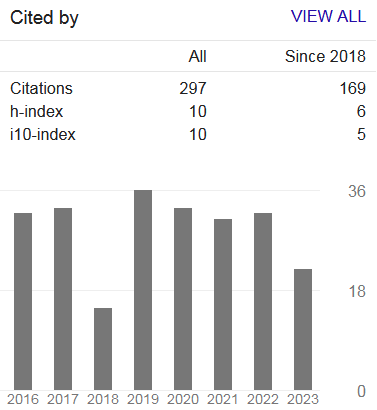
 Citation count:
  Google h-index:
  Downloads: