
.svg)






PREPARATION OF IMMUNE-BOOSTER CHOCOLATE CAKE USING AQUEOUS EXTRACTS OF AYURVEDIC HERBS OF PHYTOCHEMICAL IMPORTANCE
Keywords:
immune-booster, Ayurveda, herbal extracts, respiratory ailments, chocolate cake, phytochemical analysisDOI:
https://doi.org/10.17654/2347527724001Abstract
Immunity boosters have gained importance during to the COVID-19 pandemic. Traditional Indian health remedial systems like Ayurveda and Yoga have come to the rescue of the global population during and after the tough pandemic times. Medicinal herbs are being used throughout human history for various purposes. Focus on plants has increased in recent times because of their richness in phytoconstituents. The Indian consumer market already has khashayas, powders, syrups and pills with herbal medicines. But the problem arises in their aesthetic appeal to the pediatric and geriatric community, as they find it difficult to consume them in the above mentioned form. The objective of this study is to prepare a chocolate cake using extracts of herbs of medicinal value. Here we are preparing chocolate cake taking into consideration the patients’ compliance.
Ginger, pepper, cinnamon and tulsi are the herbs used in the present preparation for their immune-boosting activity. These herbs were chosen for the study due to their high antioxidant activities. They are commonly used in ancient treatments for respiratory ailments such as cough, common cold, wheezing, asthma, etc. The product was tested for its physical and microbial parameters. Phytochemical tests were also performed for the presence of alkaloids and tannins. After the tests, it was found that the product has all characteristics that an immune-booster should possess and is suitable for regular and long term consumption.
Received: December 6, 2023
Accepted: January 19, 2024
References
M. Srisakthilogisha, G. Nivetha, M. Mohamed Mustafa, T. R. Siddiq Ali, N. J. Muthukumar and V. Mahalakshmi, Phytochemical and physicochemical analysis of Siddha polyherbal formulation KaranthaiChooranam, International Journal of Ayurvedic Medicine 14(1) (2023), 65-70.
M. A. Chowdhury, N. Hossain, M. A. Kashem, M. D. A. Shahid and A. Alam, Immune response in COVID-19: a review, Journal of Infection and Public Health 13(11) (2020), 1619-1629.
Itikhar Farheena, A. Kumar and U. Altaf, Development and quality evaluation of cookies fortified with date paste (Phoenix dactylifera L), International Journal of Science, Engineering and Technology 3(4) (2015), 975-978.
M. Papageorgiou, A. Paraskevopoulou, F. Pantazi and A. Skendi, Cake perception, texture and aroma profile as affected by wheat flour and cocoa replacement with carob flour, Foods 9(11) (2020), 1586.
A. Tiwari, N. Sabah, D. Roy and P. N. Kavitha, Formulation and evaluation of herbal immune booster tea, Universal Journal of Pharmacy 11(6) (2022), 8-14.
R. M. T. De Lima et al., Protective and therapeutic potential of ginger (Zingiber officinale) extract and [6]-gingerol in cancer: a comprehensive review, Phytotherapy Research 32(10) (2018), 1885-1907.
A. Rehman et al., Potential of black pepper as a functional food for treatment of airways disorders, Journal of Functional Foods 19 (2015), 126-140.
K. Pradeep, K. Bijesh and P. N. Kavitha, Formulation and evaluation of herbalised immune booster tea, Unique Journal of Pharmaceutical and Biological Sciences 10(6) (2022), 39-42.
S. Charan, G. Bhargava and P. N. Kavitha, Formulation and evaluation of herbal purifying blood syrup, Unique Journal of Ayurvedic and Herbal Medicines 10(6) (2022), 38-43.
M. H. Shahrajabian, W. Sun and Q. Cheng, Clinical aspects and health benefits of ginger (Zingiber officinale) in both traditional Chinese medicine and modern industry, Acta Agriculturae Scandinavica, Section B -Soil & Plant Science 69(6) (2019), 546-556.
A. U. Khan, M. S. A. Talucder, M. Das, S. Noreen and Y. S. Pane, Prospect of the black pepper (Piper nigrum L.) as natural product used to an herbal medicine, Open Access Macedonian Journal of Medical Sciences 9(F) (2021), 563 573.
J. Gruenwald, J. Freder and N. Armbruester, Cinnamon and health, Critical Reviews in Food Science and Nutrition 50(9) (2010), 822-834.
P. Panchal and N. Parvez, Phytochemical analysis of medicinal herb (ocimum sanctum), Int. J. Nanomater. Nanotechnol. Nanomed. 5(2) (2019), 008-011.
M. Cohen, Tulsi - Ocimum sanctum: a herb for all reasons, Journal of Ayurveda and Integrative Medicine 5(4) (2014), 251.
J. Redfern, J. Verran, D. Burdass and M. Kinninmonth, Using soxhlet ethanol extraction to produce and test plant material (essential oils) for their antimicrobial properties, Journal of Microbiology and Biology Education 15(1) (2014), 45-46.
N. Niemenak, C. Rohsius, S. Elwers, D. Omokolo Ndoumou and R. Lieberei, Comparative study of different cocoa (Theobroma cacao L.) clones in terms of their phenolics and anthocyanins contents, Journal of Food Composition and Analysis 19(6-7) (2006), 612-619.
H. Amani, L. Baranyai, K. Badak-Kerti and A. Mousavi Khaneghah, Influence of baking temperature and formulation on physical, sensorial, and morphological properties of pogácsa cake: an image analysis study, Foods 11(3) (2022), 321.
R. Jahanbakhshi and S. Ansari, Physicochemical properties of sponge cake fortified by olive stone powder, Journal of Food Quality Volume 2020, Article ID 1493638.
A. G. Lamdande, S. T. Khabeer, R. Kulathooran and I. Dasappa, Effect of replacement of sugar with jaggery on pasting properties of wheat flour, physico-sensory and storage characteristics of muffins, J. Food Sci. Technol. 55(8) (2018), 3144-3153. doi: 10.1007/s13197-018-3242-7.
U. J. J. Ijah, H. S. Auta, M. O. Aduloju and S. A. Aransiola, Microbiological, nutritional, and sensory quality of bread produced from wheat and potato flour blends, Int. J. Food Sci. Volume 2014, Article ID 671701.
https://doi.org/10. 1155/2014/671701.
Downloads
Published
Issue
Section
License
Copyright (c) 2024 PUSHPA PUBLISHING HOUSE, PRAYAGRAJ, INDIA

This work is licensed under a Creative Commons Attribution 4.0 International License.
Attribution: Credit Pusha Publishing House as the original publisher, including title and author(s) if applicable.
Non-Commercial Use: For non-commercial purposes only. No commercial activities without explicit permission.
No Derivatives: Modifying or creating derivative works not allowed without written permission.
Contact Pusha Publishing House for more info or permissions.



 Publication count:
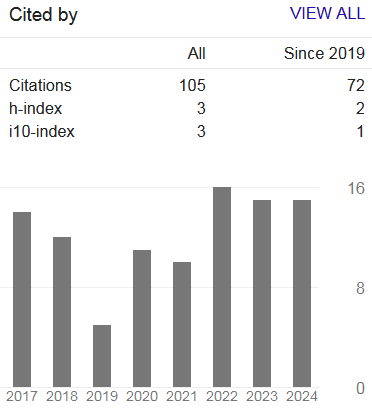
  Google h-index:
  Downloads: