


.svg)






RDSSMM: A FUZZY EXPERT SYSTEM FOR ENHANCED MALARIA DIAGNOSIS AND MANAGEMENT IN ENDEMIC REGIONS
Keywords:
Recommender and Decision Support System for Malaria Management (RDSSMM), fuzzification, defuzzificationDOI:
https://doi.org/10.17654/0973514324028Abstract
Malaria continues to be a pressing public health issue in tropical regions, with its deleterious effects on human health well documented. While a minority of cases may be life threatening, delayed diagnosis can significantly worsen the severity of malaria. This paper presents the Recommender and Decision Support System for Malaria Management (RDSSMM), designed to assist researchers, physicians and healthcare professionals in malaria endemic areas. RDSSMM is made up of four main components: a knowledge base, fuzzification module, inference engine, and defuzzification module. Mayo Hospital Lahore, Pakistan was used to develop the fuzzy expert system based on experts’ opinions in the field of medicine. For ease of access, a mobile application has been included which allows patients to get primary diagnosis by keying in their physical signs that are then transformed into fuzzy membership functions. The data was collected from the outpatient department of Mayo Hospital Lahore as one way of evaluating RDSSMM’s effectiveness. Comparing its predictions to expert medical diagnoses and reports pointed out this system’s performance. Malaria risk was correctly predicted 80% of the time by RDSSMM. These findings show that RDSSMM can greatly improve malaria management in rural areas through provision of quick and accurate results, which would facilitate timely decisions regarding malaria testing and monitoring.
Received: July 18, 2024
Revised: October 1, 2024
Accepted: October 10, 2024
References
P. Poolphol, R. E. Harbach, P. Sriwichai, K. Aupalee, J. Sattabongkot, C. Kumpitak, W. Srisuka, K. Taai, S. Thongsahuan, R. Phuackchantuck and A. Saeung, Natural plasmodium vivax infections in anopheles mosquitoes in a malaria endemic area of northeastern Thailand, Parasitology Research 116(12) (2017), 3349-3359.
M. Sajjad, S. Khan, Z. Jan, K. Muhammad, H. Moon, J. T. Kwak, S. Rho, S. W. Baik and I. Mehmood, Leukocytes classification and segmentation in microscopic blood smear: a resource-aware healthcare service in smart cities, IEEE Access 5 (2016), 3475-3489.
B. Moonen, J. M. Cohen, R. W. Snow, L. Slutsker, C. Drakeley, D. L. Smith, R. R. Abeyasinghe, M. H. Rodriguez, R. Maharaj, M. Tanner and G. Targett, Operational strategies to achieve and maintain malaria elimination, The Lancet 376(9752) (2010), 1592-1603.
D. Q. Wang, X. H. Liang, S. N. Lu, W. Ding, J. Huang, X. Wen, S. Lv, N. Xiao, L. Husain and X. N. Zhou, China’s long march to malaria elimination: a case of adaptive management, Malaria Journal 21(1) (2022), 1-4.
M. Rahi and A. Sharma, India could harness public-private partnerships to achieve malaria elimination, The Lancet Regional Health - Southeast Asia 5 (2022), 100059.
A. B. Tiono, D. T. Kangoye, A. M. Rehman, D. G. Kargougou, Y. Kaboré, A. Diarra, E. Ouedraogo, I. Nébié, A. Ouédraogo, B. Okech and P. Milligan, Malaria incidence in children in South-West Burkina Faso: comparison of active and passive case detection methods, PloS One 9(1) (2014), e86936.
P. E. Duffy, J. P. Gorres, S. A. Healy and M. Fried, Malaria vaccines: a new era of prevention and control, Nature Reviews Microbiology (2024), 1-7.
E. I. Obeagu and G. U. Obeagu, Hematocrit fluctuations in HIV patients co-infected with malaria parasites: a comprehensive review, Int. J. Curr. Res. Med. Sci. 10(1) (2024), 25-36.
K. Miura, Y. Flores-Garcia, C. A. Long and F. Zavala, Vaccines and monoclonal antibodies: new tools for malaria control, Clinical Microbiology Reviews 37 (2024), e00071-23.
Downloads
Published
Issue
Section
License
Copyright (c) 2024 PUSHPA PUBLISHING HOUSE, PRAYAGRAJ, INDIA

This work is licensed under a Creative Commons Attribution 4.0 International License.
_________________________
Attribution: Credit Pushpa Publishing House as the original publisher, including title and author(s) if applicable.
Non-Commercial Use: For non-commercial purposes only. No commercial activities without explicit permission.
No Derivatives: Modifying or creating derivative works not allowed without written permission.
Contact Puspha Publishing House for more info or permissions.

 Journal Impact Factor:

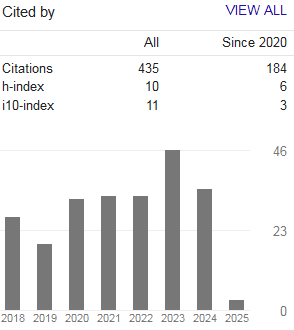
 Publication count: 330
 Google h-index: 10
 Downloads: 87500+