


.svg)






COMBATING DIABETES THROUGH TECHNOLOGY: EVALUATING THE EFFECTIVENESS OF PERSUASIVE INTERVENTIONS FOR DIET AND EXERCISE MANAGEMENT
Keywords:
diabetes management, persuasive technology, diet management, exercise management, health outcomesDOI:
https://doi.org/10.17654/0973514324022Abstract
We investigate the efficacy of technology-based persuasive therapies in assisting individuals with type 2 diabetes in managing their diet and exercise. The work employs a quantitative methodology, involving 100 participants divided into control and experimental groups. The experimental group received conventional treatment augmented with persuasive technological interventions, while the control group received standard care. Descriptive statistics, including mean decline percentages, kurtosis, and skewness, were used to track changes in health indicators. Inferential analyses, such as ANOVA and correlation analysis, were employed to examine the relationships between variables and determine the significance of differences between the groups.
The findings revealed significant differences in outcome measures between the control and experimental groups, with the experimental group showing substantial improvements post-intervention. Descriptive analyses indicated noteworthy changes in health indicators, while inferential analyses confirmed the intervention’s effectiveness by demonstrating consistent correlations across variables and significant group differences. These results underscore the success of the persuasive technological interventions in enhancing diabetes management.
This study contributes to the field by providing empirical data on the impact of persuasive technology on diabetes treatment. It highlights the potential clinical benefits of integrating such interventions into standard care, offering a comprehensive understanding of their influence on health outcomes. The integration of descriptive and inferential analyses presents a robust evaluation of the intervention’s efficacy, suggesting that technology-based persuasive therapies could be a valuable addition to conventional diabetes management practices. This work thus supports the adoption of innovative technological solutions to improve health outcomes for individuals with type 2 diabetes.
Received: June 2, 2024
Accepted: July 9, 2024
References
A. Alkhatib, Personalising exercise and nutrition behaviours in diabetes lifestyle prevention, European Medical Journal 5(1) (2020), 67-77.
R. A. Asbjørnsen, J. Hjelmesæth, M. L. Smedsrød, J. Wentzel, M. Ollivier, M. M. Clark and L. Solberg Nes, Combining persuasive system design principles and behavior change techniques in digital interventions supporting long-term weight loss maintenance: design and development of eCHANGE, JMIR Human Factors 9(2) (2022), e37372.
I. Bardhan, H. Chen and E. Karahanna, Connecting systems, data, and people: a multidisciplinary research roadmap for chronic disease management, MIS Quarterly 44(1) (2020), 185-200.
B. Bode, A. King, D. Russell-Jones and L. K. Billings, Leveraging advances in diabetes technologies in primary care: a narrative review, Annals of Medicine 53(1) (2021), 805-816.
L. J. Dobbie, A. Tahrani, U. Alam, J. James, J. Wilding and D. J. Cuthbertson, Exercise in obesity-the role of technology in health services: can this approach work?, Current Obesity Reports (2021), 1-14.
N. M. Fischer, V. A. Pallazola, H. Xun, M. Cainzos-Achirica and E. D. Michos, The evolution of the heart-healthy diet for vascular health: a walk through time, Vascular Medicine 25(2) (2020), 184-193.
S. Jiménez, R. Juárez-Ramírez, A. Ramírez-Noriega, F. Murillo-Muñoz, A. I. Molina, V. H. Castillo and C. Navarro-Cota, A usability and persuasion evaluation of mobile apps for diabetes type 2, Programming and Computer Software 48(8) (2022), 552-565.
J. A. Kanaley, S. R. Colberg, M. H. Corcoran, S. K. Malin, N. R. Rodriguez, C. J. Crespo and J. R. Zierath, Exercise/physical activity in individuals with type 2 diabetes: a consensus statement from the American College of Sports Medicine, Medicine and Science in Sports and Exercise 54 (2022), 353-368.
A. A. Motala, J. C. Mbanya, K. Ramaiya, F. J. Pirie and K. Ekoru, Type 2 diabetes mellitus in sub-Saharan Africa: challenges and opportunities, Nature Reviews Endocrinology 18(4) (2022), 219-229.
Y. Mukhtar, A. Galalain and U. Yunusa, A modern overview on diabetes mellitus: a chronic endocrine disorder, European Journal of Biology 5(2) (2020), 1-14.
M. L. Murphy, D. R. Lubans, K. E. Cohen, S. L. Robards, M. Wilczynska, S. G. Kennedy and R. C. Plotnikoff, Preliminary efficacy and feasibility of referral to exercise specialists, psychologists and provision of a technology-based behavior change support package to promote physical activity in school teachers ‘at risk’ of, or diagnosed with, type 2 diabetes: The ‘SMART Health’ Pilot Study Protocol, Contemporary Clinical Trials 78 (2019), 53-62.
J. Reed, S. Bain and V. Kanamarlapudi, A review of current trends with type 2 diabetes epidemiology, aetiology, pathogenesis, treatments and future perspectives, Diabetes, Metabolic Syndrome and Obesity 14 (2021), 3567-3602.
M. Saleem, L. Kühne, K. K. De Santis, L. Christianson, T. Brand and H. Busse, Understanding engagement strategies in digital interventions for mental health promotion: scoping review, JMIR Mental Health 8(12) (2021), e30000.
S. Sittig, A. McGowan and S. Iyengar, Extensive review of persuasive system design categories and principles: behavioral obesity interventions, Journal of Medical Systems 44 (2020), 1-12.
J. M. Yap, N. Tantono, V. X. Wu and P. Klainin-Yobas, Effectiveness of technology based psychosocial interventions on diabetes distress and health-relevant outcomes among type 2 diabetes mellitus: a systematic review and meta analysis, Journal of Telemedicine and Telecare 30 (2021), 1357633X211058329.
S. Zare, J. Ostovarfar, M. H. Kaveh and M. Vali, Effectiveness of theory-based diabetes self-care training interventions; a systematic review, Diabetes and Metabolic Syndrome: Clinical Research and Reviews 14(4) (2020), 423-433.
W. Zhai, L. Bai, R. Zhou, X. Fan, G. Kang, Y. Liu and K. Zhou, Recent progress on wear-resistant materials: designs, properties, and applications, Advanced Science 8(11) (2021), 2003739.
I. M. Rosenstock, The health belief model and preventive health behavior, Health Education and Behavior 2(4) (1974), 354-386.
doi: 10.1177/109019817400200405.
Y.-L. Theng, J. W. Y. Lee, P. V. Patinadan and S. S. B. Foo, The use of videogames, gamification, and virtual environments in the self-management of diabetes: a systematic review of evidence, Games for Health Journal 4(5) (2015), 352-361. doi: 10.1089/g4h.2014.0114.
A. Baum, Cambridge Handbook of Psychology, Health and Medicine, Cambridge University Press, 1997.
N. K. Janz and M. H. Becker, The health belief model: a decade later, Health Education and Behavior 11(1) (1984), 1-47. doi: 10.1177/109019818401100101.
A. Geirhos, M. Stephan, M. Wehrle, C. Mack, E.-M. Messner, A. Schmitt, H. Baumeister, Y. Terhorst and L. B. Sander, Standardized evaluation of the quality and persuasiveness of mobile health applications for diabetes management, Scientific Reports 12(1) (2022), 3639.
Downloads
Published
Issue
Section
License
Copyright (c) 2024 PUSHPA PUBLISHING HOUSE, PRAYAGRAJ, INDIA

This work is licensed under a Creative Commons Attribution 4.0 International License.
_________________________
Attribution: Credit Pushpa Publishing House as the original publisher, including title and author(s) if applicable.
Non-Commercial Use: For non-commercial purposes only. No commercial activities without explicit permission.
No Derivatives: Modifying or creating derivative works not allowed without written permission.
Contact Puspha Publishing House for more info or permissions.

 Journal Impact Factor:


 Publication count: 330
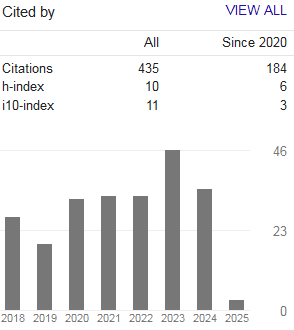
 Google h-index: 10
 Downloads: 87500+