
RUNGE-KUTTA’S 4TH-ORDER DIFFERENTIAL EQUATION SYSTEM (RK4) BASED ON THE SIR (SUSCEPTIBLE-INFECTED-REMOVED) EPIDEMIOLOGICAL MODEL TO PREDICT THE DYNAMIC SPREAD OF COCOA SWOLLEN SHOOT VIRUS
Keywords:
SIR (Susceptible-Infected-Removed) model, swollen shoot, stochastic variable, Runge-Kutta method, 4th-order differential equation, predictive analysisDOI:
https://doi.org/10.17654/0972111825007Abstract
Swollen shoot disease (CSSV - Cocoa Swollen Shoot Virus) represents a major threat to cocoa plantations, causing significant economic losses in cocoa-producing regions. This paper proposes a differential equation system based on a Runge-Kutta 4th-order SIR (Susceptible-Infected-Removed) epidemiological model to analyze, predict and control the spread of Swollen Shoot disease in cocoa plantations. This model makes it possible to analyze epidemiological dynamics with stochastic variability, identifying effective strategies for limiting the impact of the disease. The aim of the SIR model is to provide a predictive tool to assess disease spread dynamics, identify critical parameters influencing the epidemic, such as transmission rate and recovery rate while developing optimal control strategies to minimize losses. The methodological technique will consist of compartmentalizing the tree population into three: susceptible trees infected trees and withdrawn (felled or immunized) trees in a system of differential equations describing the flow between these compartments with the key parameters and Numerical results from simulations using the Runge-Kutta method make it possible to identify critical moments, such as the infection peak justifying optimization of intervention strategies, particularly in terms of biological vector management, rapid pruning to remove infected trees and long-term prevention of epidemic duration and the final number of trees infected or removed.
Received: February 7, 2025
Accepted: March 29, 2025
References
P. Ofori and A. Dankwa, Spatial modelling of CSSV epidemics in West Africa, Journal of Agroecological Modelling 45(3) (2017), 89-104.
M. Owusu-Manu, F. A. Yeboah and F. M. Amoah, Control measures for cocoa swollen shoot virus using SIR-based optimization, African Crop Science Journal 26(2) (2018), 123-136.
G. A. Ameyaw, O. Domfeh, L. A. A. Ollennu and G. K. Owusu, Spatiotemporal spread of cacao swollen shoot virus severe strain 1A in mixed hybrid cacao pre-inoculated with mild strain N1 in Ghana, Plant Disease 103(12) (2019), 3245-3252.
A. Mensah-Bonsu and B. Frempong, Economic impact assessment of cocoa swollen shoot virus using SIR modeling framework, Ecological Economics 180 (2021), 106870.
P. Ofori and A. Dankwa, Spatial-temporal modeling of cocoa swollen shoot virus spread in West Africa, Spatial and Spatio-temporal Epidemiology 41 (2022), 100450.
W. Affesi, Impact of cocoa swollen shoot virus on livelihoods and adoption of resistant varieties in Côte d’Ivoire, Agricultural Systems 195 (2023), 103289. https://doi.org/10.1016/j.agsy.2023.103289
F. B. Agusto, M. C. A. Leite, F. Owusu-Ansah, O. Domfeh, N. Hritonenko and B. Chen-Charpentier, Cacao sustainability: The case of cacao swollen-shoot virus co-infection, PLoS ONE 19(3) (2024), e0294579.
https://doi.org/10.1371/journal.pone.0294579
Y. J. M. Kouassi and A. Diawara, Community-based strategies for managing cocoa swollen shoot virus: Insights from SIR modeling, International Journal of Community Medicine and Public Health 9(4) (2024), 1500-1508.
M. Pechaud, Simulation of epidemic spread using SIR models: application to plant diseases, Computational Biology Journal 58(2) (2024), 215-230.
F. B. Agusto, M. C. A. Leite, F. Owusu-Ansah, O. Domfeh, N. Hritonenko and B. Chen-Charpentier, Cacao sustainability: The case of cacao swollen-shoot virus co-infection, PLOS ONE 19(3) (2024), e0294579.
Downloads
Published
Issue
Section
License
Copyright (c) 2025 PUSHPA PUBLISHING HOUSE, PRAYAGRAJ, INDIA

This work is licensed under a Creative Commons Attribution 4.0 International License.
___________________________________
Attribution: Credit Pusha Publishing House as the original publisher, including title and author(s) if applicable.
Non-Commercial Use: For non-commercial purposes only. No commercial activities without explicit permission.
No Derivatives: Modifying or creating derivative works not allowed without written permission.
Contact Pusha Publishing House for more info or permissions.




 Publication count:
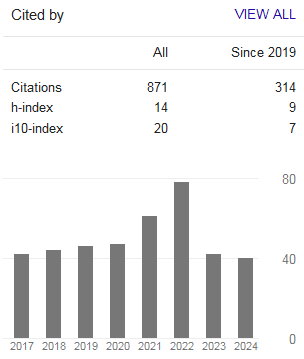
  Google h-index:
  Downloads: