
TRANSMISSION DYNAMICS OF CORONAVIRUS DISEASE DURING THE SECOND WAVE: A MATHEMATICAL STUDY IN THE HOLY CITY UJJAIN
Keywords:
coronavirus, non-standard finite difference scheme, stability analysis, parameter estimation, method of least square, numerical simulation.DOI:
https://doi.org/10.17654/0972111822008Abstract
In this paper, we attempt to study the dynamics of coronavirus disease during the second wave in the Indian district of Ujjain. For this, we use a classical epidemic model of susceptible, exposed, infected and recovered population with saturated incidence and treatment rates. We derive an associated dynamically consistent nonstandard finite difference scheme and fit it to the corresponding cumulative number of infected cases reported by the government of Madhya Pradesh. By using the method of least square, we determine the basic reproduction number and other model parameters. In order to determine the relative importance of model parameters, we perform sensitivity analysis. The current study shows that the disease prevalence was highest in early May, and the basic reproduction number was 4.275 at that time. Along with this, the study highlights the need to follow the COVID-19 protocol and confirms that the disease spreads earlier in large cities than in smaller cities.
Received: July 22, 2022
Accepted: September 29, 2022
References
A. J. Arenas, G. G. Parra, J. J. Naranjo, M. Cogollo and N De La Espriella, Mathematical analysis and numerical solution of a model of HIV with a discrete time delay, Mathematics 9(3) (2021), 257. http://doi.org/10.3390/math9030257.
A. J. Arenas, G. G. Parra and B. M. C. Charpentier, A nonstandard numerical scheme of predictor-corrector type for epidemic models, Comput. Math. Appl. 59(12) (2010), 3740-3749. https://doi.org/10.1016/j.camwa.2010.04.006.
Ask Apollo, New COVID-19 Symptoms to Look Out For, accessed 03 June 2022. https://healthlibrary.askapollo.com/new-covid-19-symptoms-to-look-out-for/.
S. Bentout, A. Chekroun and T. Kuniya, Parameter estimation and prediction for coronavirus disease outbreak 2019 (COVID-19) in Algeria, AIMS Public Health 7(2) (2020), 306-318. https://doi.org/10.3934/publichealth.2020026.
H. W. Berhe, O. D. Makinde and D. M. Theuri, Parameter estimation and sensitivity analysis of dysentery, diarrhea epidemic model, J. Appl. Math. 2019, Article ID 8465747, 13 pp.
S. K. Biswas, J. K. Ghosh, S. Sarkar and U. Ghosh, COVID-19 pandemic in India: a mathematical model study, Nonlinear Dynam. 102 (2020), 537-553. https://doi.org/10.1007/s11071-020-05958-z.
F. Brauer, Compartmental models in epidemiology, Mathematical Epidemiology, F. Brauer, P. V. D. Driessche and J. Wu, eds., Mathematical Biosciences Subseries, Springer, 2008. 10.1007/978-3-540-78911-6.
L. Chandrakantha, Using excel solver in optimization problems, John Jay College of Criminal Justice of CUNY, access on 29/11/2021.
https://www.researchgate.net/publication/267557388_USING_EXCEL_SOLVER_IN_OPTIMIZATION_PROBLEMS.
N. Chitnis, J. M. Hyman and J. M. Cushing, Determining important parameters in the spread of malaria through the sensitivity analysis of a mathematical model, Bull. Math. Biol. 70 (2008), 1272-1296.
N. George, N. K. Tyagi and J. B. Prasad, COVID-19 pandemic and its average recovery time in Indian states, Clinical Epidemiology and Global Health 11 (2021), Article ID 100740. https://doi.org/10.1016/j.cegh.2021.100740.
J. M. Heffernan, R. J. Smith and L. M. Wahl, Perspectives on the basic reproductive ratio, Journal of the Royal Society Interface 2(4) (2005), 281-293. doi:10.1098/rsif.2005.0042.
Home Department, Government of Madhya Pradesh, CORONA (COVID-19) Related Important Order/Direction/Info, accessed 01 June 2022.
http://home.mp.gov.in/en/coronacovid-19-related-important-orderdirectioninfo.
India Growing.com, Ujjain District Population of Rural and Urban, accessed 04 June 2022. https://www.indiagrowing.com/Madhya_Pradesh/Ujjain_District#:~: text=The%20district%20has%20an%20total,238%2C950%20are%20in%20rural%20area.
V. K. Jain, K. P. Iyengar and R. Vaishya, Differences between first wave and second wave of COVID-19 in India, Diabetes & Metabolic Syndrome: Clinical Research & Reviews 15(3) (2021), 1047-1048.
https://doi.org/10.1016/j.dsx.2021.05.009.
A. Jha, Covid-19: urban hot spots drive surge, in greater need of jab scale-up, Hindustan Times, accessed 09 June 2022.
M. Kapoor and P. K. Panda, India’s second COVID wave: how is it different from the first wave? International Journal of Infectious Diseases 116 (2022), Supplement, Page S50. https://doi.org/10.1016/j.ijid.2021.12.121.
M. J. Keeling and P. Rohani, Modelling Infectious Diseases in Humans and Animals, Princeton University Press, 2008. https://doi.org/10.2307/j.ctvcm4gk0.
W. O. Kermack and A. G. Mckendrick, A contribution to the mathematical theory of epidemics, Proceedings of the Royal Society A 115(772) (1927), 700-721. http://doi.org/10.1098/rspa.1927.0118.
S. A. Lauer, K. H. Grantz, Q. Bi, F. K. Jones, Q. Zheng, H. R. Meredith, A. S. Azman, N. G. Reich and J. Lessler, The incubation period of coronavirus disease 2019 (COVID-19) from publicly reported confirmed cases: estimation and application, Annals of Internal Medicine 172(9) (2020), 577-582. https://doi.org/10.7326/M20-0504.
S. Liao and W. Yang, A nonstandard finite difference method applied to a mathematical cholera model, Bull. Korean Math. Soc. 54(6) (2017), 1893-1912. https://doi.org/10.4134/BKMS.b160240.
R. E. Mickens, Numerical integration of population models satisfying conservation laws: NSFD methods, Journal of Biological Dynamics 1(4) (2007), 427-436. https://doi.org/10.1080/17513750701605598.
National Informatics Centre (NIC), District Centres (Ujjain, Madhya Pradesh), Government of India, accessed on 21/12/2021. https://ujjain.nic.in/.
S. Olaniyi, O. S. Obabiyi, K. S. Okosun, A. T. Oladipo and S. O. Adewale, Mathematical modelling and optimal cost-effective control of COVID-19 transmission dynamics, The European Physical Journal Plus 135(11) (2020), 938. https://doi.org/10.1080/17513750701605598.
D. A. Oluyori, A. G. C. Perez, V. A. Okhuese and M. Akram, Dynamics of an SEIRS COVID-19 epidemic model with saturated incidence and saturated treatment response: bifurcation analysis and simulations, AUPET Press Technical Journal of Daukeyev University 1(1) (2021), 39-56.
https://doi.org/10.52542/tjdu.1.1.39-56.
D. Pal, D. Ghosh, P. K. Santra and G. S. Mahapatra, Mathematical analysis of a COVID-19 epidemic model by using data driven epidemiological parameters of diseases spread in India, Biophysics 67 (2020), 231-244.
https://doi.org/10.1101/2020.04.25.20079111.
A. Radulescu, C. Williams and K. Cavanagh, Management strategies in a SEIR- type model of COVID-19 community spread, Scientific Reports 10 (2020), Article number 21256. https://doi.org/10.1038/s41598-020-77628-4.
R. Ross, The prevention of malaria, Journal of the American Medical Association LVII(21) (1911), 1715-1716. 10.1001/jama.1911.04260110215034.
State Portal for COVID-19 Monitoring, Government of Madhya Pradesh ‘Health Bulletin’ [online] (accessed form 20/12/201-26/12/2021).
http://sarthak.nhmmp.gov.in/covid/health-bulletin/.
A. Suryanto, W. M. Kusumawinahyu, I. Darti and I. Yanti, Dynamically consistent discrete epidemic model with modified saturated incidence rate, Comput. Appl. Math. 32(2) (2013), 373-383.
https://doi.org/10.1007/S40314-013-0026-6.
TIMES OF INDIA, Coronavirus Symptoms: Signs and Symptoms that COVID-19 is Impacting Your Lungs, accessed 03 June 2021.
https://timesofindia.indiatimes.com/life-style/health-fitness/health-news/ coronavirus-symptoms-signs-and-symptoms-that-covid-19-is-impacting-your-lungs/photostory/82253279.cms.
V. Tiwari, N. Deyal and N. S. Bisht, Mathematical modelling based study and prediction of COVID-19 epidemic dissemination under the impact of lockdown in India, Frontiers in Physics 8 (2020), Article 586899. https://doi.org/10.3934/mbe.2021231.
S. Vaz and D. F. M. Torres, A dynamically-consistent nonstandard finite difference scheme for the SICA model, Math. Biosci. Eng. 18(4) (2021), 4552-4571. https://doi.org/10.3934/mbe.2021231.
World Health Organization, COVID-19, Natural Immunity: Scientific Brief, 10 May 2021. https://apps.who.int/iris/handle/10665/341241.
Downloads
Published
Issue
Section
License
Copyright (c) 2022 Pushpa Publishing House, Prayagraj, India

This work is licensed under a Creative Commons Attribution 4.0 International License.
___________________________________
Attribution: Credit Pusha Publishing House as the original publisher, including title and author(s) if applicable.
Non-Commercial Use: For non-commercial purposes only. No commercial activities without explicit permission.
No Derivatives: Modifying or creating derivative works not allowed without written permission.
Contact Pusha Publishing House for more info or permissions.




 Publication count:
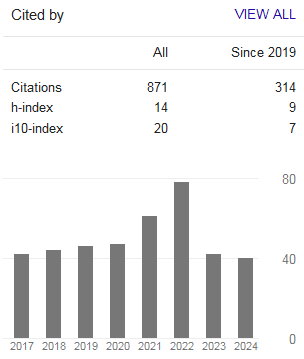
  Google h-index:
  Downloads: