


.svg)






COVID-19 SYMPTOMS DATA ANALYSIS AND MODELING FROM HUMAN BIOMETRICS AND CURRENT HEALTH CONDITION
Keywords:
biometrics, COVID-19, online questionnaire, medical historyDOI:
https://doi.org/10.17654/0973514324029Abstract
After the waves of several variants of COVID-19 that hit the world, it is necessary to explore ways to control the medical consequences of the virus and the factors that could affect or control those health issues. This could help in treating patients proactively and increasing the likelihood of controlling the infection. Thus, this paper aims to investigate the likelihood of relating biological characteristics, health condition and social status of COVID-19 infected people to the actual symptoms that resulted. The study collects data through an online questionnaire based on a cross-sectional form that gathered data from 1143 suspected COVID-19 infected participants from three countries, namely, Saudi Arabia, Egypt, and Pakistan. The collected data was preprocessed to exclude uninfected samples, resulting in 1088 confirmed infections. Then, a statistical analysis explores the relationships between the included factors and the possible appearance of symptoms. The results gave some insights into the relationship between biometrics, health records and social status of the patients. In addition, most symptoms appeared in patients who had not taken any vaccine, and the effects of the virus seem less severe with individuals who were vaccinated with one or two doses. This paper contributed to the field of knowledge by predicting the consequences of COVID-19 based on the physical characteristics of patients. The findings of this research would open a new research area of predicting symptoms based on biometrics.
Received: August 9, 2024
Revised: September 3, 2024
Accepted: September 24, 2024
References
H. Y. Lam et al., A review of epidemiology and public health control measures of COVID-19 variants in Hong Kong, December 2020 to June 2021, IJID Regions 2 (2022), 16-24. doi: https://doi.org/10.1016/j.ijregi.2021.11.002.
M. T. Tsakok et al., Parenchymal involvement on CT pulmonary angiography in SARS-CoV-2 Alpha variant infection and correlation of COVID-19 CT severity score with clinical disease severity and short-term prognosis in a UK cohort, Clinical Radiology 77(2) (2022), 148-155.
doi: https://doi.org/10.1016/j.crad.2021.11.002.
P. A. Christensen et al., Delta variants of SARS-CoV-2 cause significantly increased vaccine breakthrough COVID-19 cases in Houston, Texas, The American Journal of Pathology 192 (2022), 320-331.
doi: https://doi.org/10.1016/j.ajpath.2021.10.019.
P. Radvak et al., SARS-CoV-2 B.1.1.7 (alpha) and B.1.351 (beta) variants induce pathogenic patterns in K18-hACE2 transgenic mice distinct from early strains, Nature Communications 12(1) (2021), 6559. doi: 10.1038/s41467-021-26803-w.
T. P. Peacock et al., The SARS-CoV-2 variant, Omicron, shows rapid replication in human primary nasal epithelial cultures and efficiently uses the endosomal route of entry, bioRxiv, 2022. doi: 10.1101/2021.12.31.474653.
WHO, WHO Coronavirus Disease (COVID-19) Dashboard, Online Report, 2022. [Online]. Available: https://covid19.who.int/.
Worldometers, COVID-19 CORONAVIRUS PANDEMIC, Online Report, 2022. [Online]. Available: https://www.worldometers.info/coronavirus/.
N. Andrews et al., Effectiveness of COVID-19 booster vaccines against COVID-19 related symptoms, Hospitalisation and death in England, Nature Medicine 28 (2022), 831-837. doi: 10.1038/s41591-022-01699-1.
S. J. Stock et al., SARS-CoV-2 infection and COVID-19 vaccination rates in pregnant women in Scotland, Nature Medicine 28 (2022), 504-512.
doi: 10.1038/s41591-021-01666-2.
A. N. M. Kraay, K. N. Nelson, C. Y. Zhao, D. Demory, J. S. Weitz and B. A. Lopman, Modeling serological testing to inform relaxation of social distancing for COVID-19 control, Nature Communications 12(1) (2021), 7063.
doi: 10.1038/s41467-021-26774-y.
J. M. Trauer et al., Understanding how Victoria, Australia gained control of its second COVID-19 wave, Nature Communications 12(1) (2021), 6266.
doi: 10.1038/s41467-021-26558-4.
H. Bastani et al., Efficient and targeted COVID-19 border testing via reinforcement learning, Nature 599(7883) (2021), 108-113.
doi: 10.1038/s41586-021-04014-z.
J. J. Van Bavel et al., National identity predicts public health support during a global pandemic, Nature Communications 13(1) (2022), 517.
doi: 10.1038/s41467-021-27668-9.
D. V. Gunasekeran, R. M. W. W. Tseng, Y.-C. Tham and T. Y. Wong, Applications of digital health for public health responses to COVID-19: a systematic scoping review of artificial intelligence, telehealth and related technologies, npj Digital Medicine 4(1) (2021), 40.
doi: 10.1038/s41746-021-00412-9.
D. S. W. Ting, L. Carin, V. Dzau and T. Y. Wong, Digital technology and COVID-19, Nature Medicine 26(4) (2020), 459-461.
doi: 10.1038/s41591-020-0824-5.
Editorial, Fighting COVID-19 with HPC, Nature Computational Science 1(12) (2021), 769-770. doi: 10.1038/s43588-021-00180-2.
J. Budd et al., Digital technologies in the public-health response to COVID-19, Nature Medicine 26(8) (2020), 1183-1192. doi: 10.1038/s41591-020-1011-4.
A. Martin et al., An artificial intelligence-based first-line defence against COVID-19: digitally screening citizens for risks via a chatbot, Scientific Reports 10(1) (2020), 19012. doi: 10.1038/s41598-020-75912-x.
H. Legido-Quigley et al., Are high-performing health systems resilient against the COVID-19 epidemic? The Lancet 395(10227) (2020), 848-850.
Z. Obermeyer, A machine-learning algorithm to target COVID testing of travellers, Nature, Online: Nature Publishing Group, 2021, pp. 34-36.
G. J. Soldano, J. A. Fraire, J. M. Finochietto and R. Quiroga, COVID-19 mitigation by digital contact tracing and contact prevention (app-based social exposure warnings), Scientific Reports 11(1) (2021), 14421.
doi: 10.1038/s41598-021-93538-5.
M. Caserotti, P. Girardi, A. Tasso, E. Rubaltelli, L. Lotto and T. Gavaruzzi, Joint analysis of the intention to vaccinate and to use contact tracing app during the COVID-19 pandemic, Scientific Reports 12(1) (2022), 793.
doi: 10.1038/s41598-021-04765-9.
S. Munzert, P. Selb, A. Gohdes, L. F. Stoetzer and W. Lowe, Tracking and promoting the usage of a COVID-19 contact tracing app, Nature Human Behaviour 5(2) (2021), 247-255. doi: 10.1038/s41562-020-01044-x.
G. A. Wellenius et al., Impacts of social distancing policies on mobility and COVID-19 case growth in the US, Nature Communications 12(1) (2021), 3118. doi: 10.1038/s41467-021-23404-5.
R. Garnier, J. R. Benetka, J. Kraemer and S. Bansal, Socioeconomic disparities in social distancing during the COVID-19 pandemic in the United States: observational study, J. Med. Internet Res. 23(1) (2021), e24591 (in English).
doi: 10.2196/24591.
C. A. Figueroa et al., A text messaging intervention for coping with social distancing during COVID-19 (StayWell at home): protocol for a randomized controlled trial, JMIR Res. Protoc. 10(1) (2021), e23592. doi: 10.2196/23592.
S. Arora, J. Debesay and H. Eslen-Ziya, Persuasive narrative during the COVID-19 pandemic: Norwegian Prime Minister Erna Solberg’s posts on Facebook, Humanities and Social Sciences Communications 9(1) (2022), 35.
doi: 10.1057/s41599-022-01051-5.
R. Paludneviciene, T. Knight, G. Firl, K. Luttrell, K. Takayama and P. Kushalnagar, Perception of COVID-19 physical distancing effectiveness and contagiousness of asymptomatic individuals: cross-sectional survey of deaf and hard of hearing adults in the United States, J. Med. Internet Res. 23(2) (2021), e21103. doi: 10.2196/21103.
X. Bai et al., Advancing COVID-19 diagnosis with privacy-preserving collaboration in artificial intelligence, Nature Machine Intelligence 3(12) (2021), 1081-1089. doi: 10.1038/s42256-021-00421-z.
EU, EU Digital COVID Certificate, European Commission, 2022.
C. K. Kim et al., An automated COVID-19 triage pipeline using artificial intelligence based on chest radiographs and clinical data, npj Digital Medicine 5(1) (2022), 5. doi: 10.1038/s41746-021-00546-w.
G. Quer et al., Wearable sensor data and self-reported symptoms for COVID-19 detection, Nature Medicine 27(1) (2021), 73-77.
doi: 10.1038/s41591-020-1123-x.
M. Gadaleta et al., Passive detection of COVID-19 with wearable sensors and explainable machine learning algorithms, npj Digital Medicine 4(1) (2021), 166. doi: 10.1038/s41746-021-00533-1.
D. Celik Ertugrul and D. Celik Ulusoy, A knowledge-based self-pre-diagnosis system to predict Covid-19 in smartphone users using personal data and observed symptoms, Expert Systems 39(3) (2022), e12716.
S. Guhathakurata, S. Saha, S. Kundu, A. Chakraborty and J. S. Banerjee, A new approach to predict COVID-19 using artificial neural networks, Cyber-Physical Systems, Elsevier, 2022, pp. 139-160.
CDC, Diabetes Fast Facts, Diabetes Basics, 2021.
[Online]. Available: https://www.cdc.gov/diabetes/basics/quick-facts.html.
WHO, Noncommunicable diseases, Newsroom, 2021. [Online]. Available:
https://www.who.int/news-room/factsheets/detail/noncommunicable-diseases.
CDC, Heart Disease Facts, Heart Disease Statistics and Maps, 2022. [Online]. Available: https://www.cdc.gov/heartdisease/facts.htm.
CDC, Adult Obesity Facts, Overweight and Obesity, 2021. [Online]. Available: https://www.cdc.gov/obesity/data/adult.html.
CDC, Fast Facts About Arthritis, Arthritis Basics, 2022. [Online]. Available: https://www.cdc.gov/arthritis/basics/arthritis-fast-facts.html.
A. Bryman, Social Research Methods 6E, Oxford University Press, 2021.
M. Whitaker et al., Persistent COVID-19 symptoms in a community study of 606,434 people in England, Nature Communications 13(1) (2022), 1957.
doi: 10.1038/s41467-022-29521-z.
B. Kennedy et al., App-based COVID-19 syndromic surveillance and prediction of hospital admissions in COVID Symptom Study Sweden, Nature Communications 13(1) (2022), 2110. doi: 10.1038/s41467-022-29608-7.
J. Froberg et al., SARS-CoV-2 mucosal antibody development and persistence and their relation to viral load and COVID-19 symptoms, Nature Communications 12(1) (2021), 5621. doi: 10.1038/s41467-021-25949-x.
Downloads
Published
Issue
Section
License
Copyright (c) 2024 PUSHPA PUBLISHING HOUSE, PRAYAGRAJ, INDIA

This work is licensed under a Creative Commons Attribution 4.0 International License.
_________________________
Attribution: Credit Pushpa Publishing House as the original publisher, including title and author(s) if applicable.
Non-Commercial Use: For non-commercial purposes only. No commercial activities without explicit permission.
No Derivatives: Modifying or creating derivative works not allowed without written permission.
Contact Puspha Publishing House for more info or permissions.

 Journal Impact Factor:

 Publication count: 330
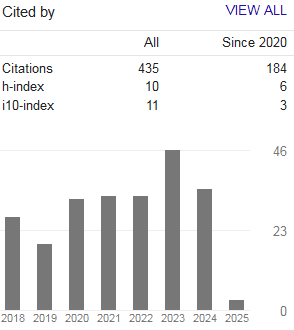
 Google h-index: 10
 Downloads: 87500+