


.svg)






CLUSTERING OF COVID-19 VACCINES BY SARS-CoV-2 INFECTION LEVEL AFTER TWO VACCINATIONS
Keywords:
medical epidemiology, medical statistics, the novel coronavirus infection, vaccination, vaccinesDOI:
https://doi.org/10.17654/0973514323001Abstract
Vaccination against COVID-19 is designed to provide herd immunity. However, there are cases of SARS-CoV-2 infection after vaccination. Using Python software, we calculated the number of SARS-CoV-2 infections per 100,000 adults after the first and second vaccinations as at July 23, 2021, conducted in St. Petersburg, Russian Federation. After the first vaccination with Gam-COVID-Vac (Sputnik V) vaccine, 544 infections were determined, and after the second vaccination - 1,643 cases. After the first vaccination with the EpiVacCorona vaccine, 1,600 infections were calculated, and after the second vaccination - 6,073 cases. After the first vaccination with CoviVac vaccine, 1,162 infections were determined, and after the second vaccination - 886 cases. Cluster analysis revealed the similarity of epidemiological indicators due to Gam-COVID-Vac and CoviVac vaccines, with EpiVacCorona vaccine isolated in a separate cluster, which is associated with significant differences in the calculated epidemiological parameters.
Received: November 3, 2022
Accepted: December 13, 2022
References
M. Bland, An Introduction to Medical Statistics, 4th ed., Oxford University Press, New York, 2015.
B. Ekmekci, C. E. McAnany and C. Mura, An introduction to programming for bioscientists: a Python-based primer, PLOS Computational Biology 12(6) (2016), e1004867. DOI: https://doi.org/10.1371/journal.pcbi.1004867.
B. S. Everitt, S. Landau and M. Leese, Cluster Analysis, 4th ed., Oxford University Press, New York, Arnold, London, 2001.
P. Fine, K. Eames and D. L. Heymann, Herd immunity: a rough guide, Clinical Infectious Diseases 52(7) (2011), 911-916.
Doi: https://doi.org/10.1093/cid/cir007.
A. Giubilini, Vaccination ethics, British Medical Bulletin 137(1) (2021), 4-12. Doi: https://doi.org/10.1093/bmb/ldaa036.
J. Keehner, L. E. Horton, M. A. Pfeffer, C. A. Longhurst, R. T. Schooley, J. S. Currier, S. R. Abeles and F. J. Torriani, SARS-CoV-2 infection after vaccination in health care workers in California, The New England Journal of Medicine 384(18) (2021), 1774-1775. Doi: 10.1056/nejmc2101927.
A. B. Kiladze, Ranking and clustering of verbal estimates of the incidence rate of symptoms of the novel coronavirus infection (COVID-19), common cold, and influenza, International Research Journal 5(95) (2020), 184-187. Doi: https://doi.org/10.23670/IRJ.2020.95.5.035.
A. B. Kiladze, Asymptomatic carrier state as a measure of information uncertainty of the novel coronavirus infection, Journal of the Liaquat University of Medical and Health Sciences 20(1) (2021), 68-70. Doi: https://doi.org/10.22442/jlumhs.2021.00766.
A. B. Kiladze, Effective reproduction number as indicator of herd immunity to SARS-CoV-2, JP Journal of Biostatistics 19 (2022), 107-111.
Doi: 10.17654/0973514322007.
A. B. Kiladze, Epidemiological mechanism of formation of herd immunity to the novel coronavirus infection, Sanitary Doctor 11 (2022), 814-820. Doi: 10.33920/med-08-2211-02 (in Russian).
J. E. M. Lacsa, COVAX COVID-19 response: we will only be safe when everybody is safe!, Journal of Public Health 44 (2022), e317.
Doi: https://doi.org/10.1093/pubmed/fdab229.
E. E. Lobanova, A. V. Kochubey, E. S. Antipenko, N. G. Dedova, A. F. Lebedeva and I. O. Kochetkova, Medical statistics, MGMSU, Moscow, 2015 (in Russian).
C. Menni, K. Klaser, A. May, L. Polidori, J. Capdevila, P. Louca, C. H. Sudre, L. H. Nguyen, D. A. Drew, J. Merino, C. Hu, S. Selvachandran, M. Antonelli, B. Murray, L. S. Canas, E. Molteni, M. S. Graham, M. Modat, A. D. Joshi, M. Mangino, A. Hammers, A. L. Goodman, A. T. Chan, J. Wolf, C. J. Steves, A. M. Valdes, S. Ourselin and T. D. Spector, Vaccine side-effects and SARS-CoV-2 infection after vaccination in users of the COVID Symptom Study app in the UK: a prospective observational study, The Lancet Infectious Diseases 21(7) (2021), 939-949. Doi: https://doi.org/10.1016/S1473-3099(21)00224-3.
B. Nogrady, Mounting evidence suggests Sputnik COVID vaccine is safe and effective, Nature 595 (2021), 339-340. Doi: 10.1038/d41586-021-01813-2.
Procedure for the COVID-19 vaccination of the adult population: interim guidelines, Ministry of Health of the Russian Federation, Letter dated June 29, 2021.
https://rulaws.ru/acts/Pismo-Minzdrava-Rossii-ot-29.06.2021-N-30-4_I_29825/ (29 November 2022, date last accessed) (in Russian).
Smolny provided data on patients with coronavirus after vaccination.
https://mr-7.ru/articles/234748/, August 2, 2021 (29 November 2022, date last accessed) (in Russian).
H. M. Wadei, T. A. Gonwa, J. C. Leoni, S. Z. Shah, N. Aslam and L. L. Speicher, COVID-19 infection in solid organ transplant recipients after SARS-CoV-2 vaccination, American Journal of Transplantation 21(10) (2021), 3496-3499.
Doi: 10.1111/j.16618.
M. B. Zeni, Principles of Epidemiology for Advanced Nursing Practice: A Population Health Perspective, Jones and Bartlett Learning, Burlington, 2021.
Downloads
Published
Issue
Section
License
Copyright (c) 2023 JP Journal of Biostatistics

This work is licensed under a Creative Commons Attribution 4.0 International License.
_________________________
Attribution: Credit Pushpa Publishing House as the original publisher, including title and author(s) if applicable.
Non-Commercial Use: For non-commercial purposes only. No commercial activities without explicit permission.
No Derivatives: Modifying or creating derivative works not allowed without written permission.
Contact Puspha Publishing House for more info or permissions.

 Journal Impact Factor:

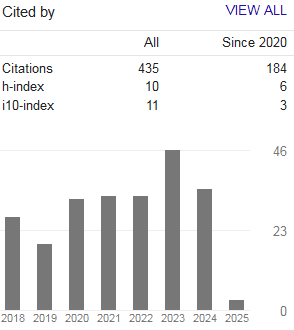
 Publication count: 330
 Google h-index: 10
 Downloads: 87500+