
COMPARATIVE AERODYNAMIC ANALYSIS OF SCALED CONCORDE AND TUPOLEV TU-144 MODELS USING WIND TUNNEL TESTING: INSIGHTS FOR SUBSONIC FLIGHT OPTIMIZATION
Keywords:
aerodynamic analysis, wind tunnel testing, Concorde, Tupolev Tu-144, scaled models, delta wing, subsonic flight, supersonic flight, angle of attack (AOA), lift-to-drag ratio, vortex flow, flow separation, Reynolds number, drag reduction, active flow control, morphing wings, lightweight materials, supersonic transport, aerodynamic efficiency, stall behaviorDOI:
https://doi.org/10.17654/0973468625005Abstract
In this work, a wind tunnel is used to test two scale models of the Tupolev Tu-144 and Concorde at varying Reynolds numbers and angles of attack (AOA). The Concorde’s delta wing design made it perform well in subsonic and supersonic flights due to its high lift-to-drag ratios, efficient vortex flow, and consistent performance up to 25 deg AOA. The design’s limitations in high circumstances were demonstrated by the drag superiority stalling that occurred beyond 25 degrees. Even though it was designed to be supersonic, the Tupolev Tu-144 experienced tremendous drag and very little lift at lower air-to-air altitudes (AOAs) due to flow separation and turbulence. The Concorde has stronger aerodynamics and can adapt to several flight regimes, while the TU-144 can only fly supersonic, according to the research. Aerodynamic designers can use Concorde-inspired active flow control systems, morphing wings, and lightweight materials to maximize lift generation, drag reduction, and efficiency. This study lays the groundwork for future supersonic transport systems that maximize high-speed performance and operational and environmental sustainability.
Received: April 6, 2025
Accepted: May 20, 2025
References
[1] D. Collard, Concorde airframe design and development, SAE Transactions 100 (1991), 2620-2641. http://www.jstor.org/stable/44548119.
[2] J. S. Woodward, Aerodynamic design for Concorde, ASME Journal of Aircraft 114 (1987), 13-20.
[3] Robert Rivers, E. Jackson, C. Fullerton, Timothy Cox and Norman Princen, A Qualitative Piloted Evaluation of the Tupolev Tu-144 Supersonic Transport, 2000.
[4] Yicheng Sun and Howard Smith, Review and prospect of supersonic business jet design, Progress in Aerospace Sciences 90 (2017), 12-38.
https://doi.org/10.1016/j.paerosci.2016.12.003.
[5] Saya Mochizuki and Gouji Yamada, Aerodynamic characteristics and flow field of delta wings with the canard, 2018.
https://doi.org/10.1051/matecconf/201814503010.
[6] NASA Glenn Research Center, Principles of Wind Tunnel Testing, 2021. Retrieved from https://www.grc.nasa.gov.
[7] J. B. Barlow, W. H. Rae and A. Pope, Low-speed Wind Tunnel Testing, Wiley, 1999.
[8] J. D. Anderson, Fundamentals of Aerodynamics, McGraw-Hill, 2010.
[9] NASA Ames Research Center, Wind Tunnel Balances: Measuring Aerodynamic Forces, 2020. Retrieved from https://www.nasa.gov.
[10] European Wind Tunnel Association (EUWETAN), Testing Aerodynamics in Supersonic Flow Conditions, 2019. Retrieved from https://www.euwetan.org.
[11] S. F. Hoerner, Fluid-dynamic Drag: Practical Information on Aerodynamic Drag and Hydrodynamic Resistance, Hoerner Fluid Dynamics, 1965.
[12] A. Pope and L. Goin, High-speed Wind Tunnel Testing, Wiley, 1965.
[13] European Wind Tunnel Association (EUWETAN), Wind Tunnel Operational Guidelines and Best Practices, 2019. Retrieved from https://www.euwetan.org.
[14] D. M. Tang, J. K. Henry and E. H. Dowell, Limit cycle oscillations of delta wing models in low subsonic flow, AIAA J. 37 (1999), 1355-1362.
https://doi.org/10.2514/3.14330.
[15] P. J. Attar, E. H. Dowell and D. M. Tang, Modeling the LCO of a delta wing model with an external store using a high fidelity structural model, Proceedings of the AIAA SDM Conference, Austin, Texas, 2005.
https://doi.org/10.2514/6.2005-1913.
[16] J. Zhang and Z. Yu, Overview of 3D printing technologies for reverse engineering product design, Autom. Control Comput. Sci. 50 (2016), 91-97.
https://doi.org/10.3103/S0146411616020073.
[17] G. K. Batchelor, An Introduction to Fluid Dynamics, Cambridge University Press, Cambridge, UK, 2000. https://doi.org/10.1017/CBO9780511800955.
[18] T. Yama, T. Lim and R. A. D. Zbikowski, Flow control on delta wings: a review, Prog. Aerosp. Sci. 40(7) (2004), 559-575.
Downloads
Published
Issue
Section
License
Copyright (c) 2025 PUSHPA PUBLISHING HOUSE, PRAYAGRAJ, INDIA

This work is licensed under a Creative Commons Attribution 4.0 International License.
_________________________
Attribution: Credit Pusha Publishing House as the original publisher, including title and author(s) if applicable.
Non-Commercial Use: For non-commercial purposes only. No commercial activities without explicit permission.
No Derivatives: Modifying or creating derivative works not allowed without written permission.
Contact Pusha Publishing House for more info or permissions.




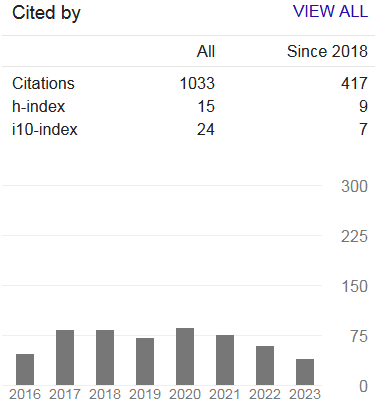
 Citation count:
  Google h-index:
  Downloads: