
PARAMETERIZING THE RELATIONS BETWEEN METEOROLOGICAL-OCEANOGRAPHIC VARIABLES FOR MARINE SCIENCES AND ENGINEERING
Keywords:
met-ocean parameters, air-sea-land interaction, wind-induced drift current, storm surge, seabed stress and scouring, tropical cyclones, RAMMB’s TC surface analysis, marine meteorologyDOI:
https://doi.org/10.17654/0973468625009Abstract
Fuzzy hypothesis testing is a useful framework for addressing statistical inference problems involving vague or imprecise data. In this paper, we enhance the interpretability and consistency of such tests by introducing a ranking-based approach for comparing trapezoidal fuzzy numbers. The method integrates a geometric and information-sensitive order relation into the defuzzification stage of fuzzy p-values, improving the decision-making process under uncertainty. This modification is applied within an existing fuzzy hypothesis testing structure, where fuzzy null and alternative hypotheses are evaluated, and the resulting p-values are interpreted through ranking rather than arbitrary thresholds. Two numerical examples are provided to illustrate how the proposed ranking step affects the final decision, showing that different defuzzification strategies can lead to distinct conclusions. The proposed approach maintains mathematical rigor while offering a more intuitive interpretation of fuzzy test outcomes. The findings suggest that selecting a robust ranking mechanism is crucial when testing hypotheses based on fuzzy data, and they open new perspectives for applying fuzzy statistics in fields such as engineering, medicine, and social sciences.
Received: June 24, 2025
Accepted: September 10, 2025
References
[1] G. P. Bancroft, Marine weather review - North Pacific Area March to August 2015 [Internet], College Park, MD: National Center for Environmental Prediction, 2016. Available from:
https://www.vos.noaa.gov/MWL/201604/northpacific.shtml#contents.
[2] S. A. Hsu, Estimating overwater friction velocity and exponent of power-law wind profile from gust factor during storms, J. Waterway Port Coast Ocean Eng. 129 (2003), 174-177.
[3] S. A. Hsu, Coastal Meteorology, Academic Press, San Diego, 1988.
[4] P. K. Taylor and M. J. Yelland, The dependence of sea surface roughness on the height and steepness of the waves, J. Phys. Oceanogr. 31 (2001), 572-590.
[5] G. T. Csanady, Air-sea Interaction: Laws and Mechanisms, Cambridge University Press, 2001.
[6] J. B. Edson et al., On the exchange of momentum over the open ocean, J. Phys. Oceanogr. 43 (2013), 1589-1610.
[7] K. M. Bryant and M. Akbar, An exploration of wind stress calculation techniques in hurricane storm surge modeling, J. Mar. Sci. Eng. 4 (2016), 58.
[8] D. Myrhaug, B. J. Leira and W. Chai, Application of a sea surface roughness formula using joint statistics of significant wave height and spectral wave steepness, J. Ocean Eng. Mar. Energy 6 (2020), 91-97.
https://doi.org/10.1007/s40722-020-00160-0.
[9] S. D. Smith, Wind stress and heat flux over the ocean in gale force winds, J. Phys. Oceanogr. 10(5) (1980), 709-726.
[10] G. L. Geernaert, S. E. Larsen and F. Hansen, Measurements of the wind stress, heat flux, and turbulence intensity during storm conditions over the North Sea, Journal of Geophysical Research 92(C12) (1987), 13127-13139.
[11] A. V. Babanin, T.-W. Hsu, A. Roland, S.-H. Ou, D.-J. Doong and C. C. Kao, Spectral wave modeling of Typhoon Krosa, Nat. Hazards Earth Syst. Sci. 11 (2011), 501-511. doi: 10.5194/nhess-11-501-2011.
[12] S. A. Hsu, Y. He and H. Shen, Buoy measurements of wind-wave relations during hurricane Matthew in 2016, J. Phys. Oceanogr. 47 (2017), 2603-2609.
[13] S. A. Hsu, On the relation between overwater friction velocity and the wind Speed during tropical cyclones, Adv. Environ Eng. Res. 6(1) (2025), 007.
doi: 10.21926/aeer.2501007.
[14] W. J. Teague, E. Jarosz, D. W. Wang and D. A. Mitchell, Observed oceanic response over the upper continental slope and outer shelf during Hurricane Ivan, J. Phys. Oceanogr. 37(9) (2007), 2181-2206. doi: org/10.1175/JPO3115.1.
[15] P. A. Hwang and F. J. Walsh, Estimating maximum significant wave height and dominant wave period inside tropical cyclones, Weather and Forecasting 33(4) (2018), 955-966. doi: 10.1175/WAF-D-17-0186.1.
[16] B. A. Harper, J. D. Kepert and J. D. Ginger, Guidelines for converting between various wind averaging periods in tropical cyclone conditions, WMO/TD-No. 1555, 2010.
[17] Y.-C. Chang, P. C. Chu, L. R. Centurioni and R.-S. Tseng, Observed near-surface currents under four super typhoons, Journal of Marine Systems 139 (2014), 311-319.
[18] J. Wu, Sea-surface drift currents induced by wind and waves, J. Phys. Oceanogr. 13 (1983), 1441-1451.
[19] S. A. Hsu, Spatial relation between wind stress and storm surge during Hurricanes Laura and Delta in 2020, Advances in Environmental and Engineering Research 2(3) (2021), 022. doi: 10.21926/aeer.2103022.
[20] S. A. Hsu, Some value-added met-ocean products to the RAMMB’s TC surface analysis for marine meteorological applications, Adv. Environ. Eng. Res. 4(4) (2023), 054. doi: 10.21926/aeer.2304054.
[21] C. E. Abel, B. A. Tracy, C. L. Vincent and R. E. Jensen, Hurricane hindcast methodology and wave statistics for Atlantic and Gulf hurricanes from 1956-1975, WIS Report 19, Coastal Engineering Research Center, Waterways Experimental Station, Corps of Engineers, P. O. Box 631, Vicksburg, Mississippi, 1989.
[22] S. A. Hsu, J. M. III. Grymes and Z. Yan, A simplified hydrodynamic formula for estimating the wind-driven flooding in Lake Pontchartrain-Amite River Basin, National Weather Digest 21(4) (1997), 18-22.
[23] S. A. Hsu, Air-sea-land interactions during tropical cyclones, Encyclopedia of Water: Science, Technology and Society, Chapter 124 (2019), 1345-1358, by John Wiley & Sons.
[24] P. Soulsby, Dynamics of Marine Sands - A Manual for Practical Applications, Thomas Telford Publications, London, 1997.
[25] S. A. Hsu, Storm surges in New York during Hurricane Sandy in 2012: a verification of the wind-stress tide relation, Boundary-Layer Meteorol. 148 (2013), 593-598.
[26] World Meteorological Organization, WMO fact-finding mission to Myanmar, Yangon and NayPyiTaw, 9-13 February 2009, Mission Report.
[27] D.-P. Wang, Hindcast of waves and currents in Hurricane Katrina, Bulletin of the American Meteorological Society 89 (2008), 487-496.
https://doi.org/10.1175/BAMS-89-4-487.
[28] D. J. T. Carter, Prediction of wave height and period for a constant wind velocity using the JONSWAP formulae, Ocean Eng. 9 (1982), 17-33.
[29] W. M. Drennan, P. K. Taylor and M. J. Yelland, Parameterizing the sea surface roughness, J. Phys. Oceanogr. 35 (2005), 835-848. doi: 10.1175/JPO2704.1.
[30] E. L. Andreas, L. Mahrt and D. Vickers, A new drag relation for aerodynamically rough flow over the ocean, J. Atmos. Sci. 69 (2012), 2520-2537.
doi: 10.1175/JAS-D-11-0312.
Downloads
Published
Issue
Section
License
Copyright (c) 2025 PUSHPA PUBLISHING HOUSE, PRAYAGRAJ, INDIA

This work is licensed under a Creative Commons Attribution 4.0 International License.
_________________________
Attribution: Credit Pusha Publishing House as the original publisher, including title and author(s) if applicable.
Non-Commercial Use: For non-commercial purposes only. No commercial activities without explicit permission.
No Derivatives: Modifying or creating derivative works not allowed without written permission.
Contact Pusha Publishing House for more info or permissions.





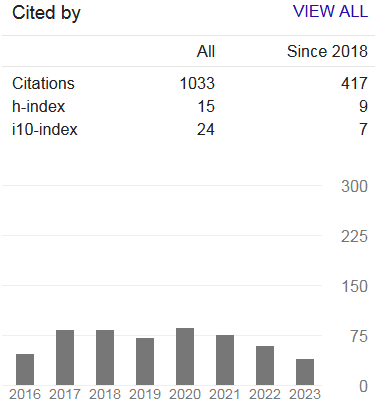
 Citation count:
  Google h-index:
  Downloads: