
ENERGY CONSUMPTION SIMULATION WITH BEHAVIORAL ADJUSTMENT BASED ON THRESHOLDS
Keywords:
energy consumption simulation, behavioral adjustment, thresholds, Internet of Things, artificial intelligence, energy managementDOI:
https://doi.org/10.17654/0975045226004Abstract
This study presents a simulation of energy consumption incorporating behavioral adjustment based on predefined thresholds. Against a backdrop of continuing growth in energy demand and environmental concerns, our research demonstrates how the integration of intelligent technologies, such as the Internet of Things (IoT) and Artificial Intelligence (AI), can optimize energy management. The results show that our approach can reduce energy consumption by up to 30%, surpassing the results of previous studies. This work is helping to establish sustainable and efficient energy practices.
Received: August 27, 2025
Revised: September 8, 2025
Accepted: September 12, 2025
References
[1] Agence internationale de l’énergie (AIE), World Energy Outlook, 2019. https://www.iea.org/reports/world-energy-outlook-2019.
[2] National Renewable Energy Laboratory (NREL), Energy Management Systems: A Guide to Energy Management, 2020.
https://www.nrel.gov/docs/fy20osti/76050.pdf.
[3] Y. Zhang and J. Zhao, A smart energy management system based on Internet of Things (IoT) Technology, Renewable Energy 146 (2020), 243-252.
https://doi.org/10.1016/j.renene.2019.06.029.
[4] A. Gonzalez et al. Smart energy management systems: a review and future directions, Energy Reports 7 (2021), 1234-1247.
https://doi.org/10.1016/j.egyr.2021.01.030.
[5] Moussa et al., Energy consumption optimization in public sector: a case study, 2021. https://doi.org/10.1016/j.scs.2021.103555.
[6] S. Khan, A. Ali and M. Khan, IoT-based smart energy management system for residential applications, Energy Reports 6 (2020), 259-270.
https://doi.org/10.1016/j.egyr.2020.12.016.
[7] A. Chowdhury, M. M. Rahman and M. R. Karim, AI-based energy management systems in smart buildings: A review, Sustainable Cities and Society 65 (2021), 102650. https://doi.org/10.1016/j.scs.2020.102650.
[8] M. K. Patel and A. Shah, Dynamic energy management system for commercial buildings using IoT, Journal of Building Performance 11(2) (2020), 114-122. https://doi.org/10.38050/jbp.2020.114.
[9] Li et al., A smart energy management system based on IoT for residential buildings, 2023. https://doi.org/10.1051/e3sconf/202338704009.
[10] Toan Le Vu, Hoang Chu Duc, Quynh Xuan Tran and Huong Thu Nguyen, A systematic review on optimized integration of renewable energy in smart and green buildings, Green Transformation in the Context of Global Change: Proceedings of the International Conference on Green Transformation in the Context of Global Change (GREEN 2024), CRC Press, Hanoi, Vietnam, October 24th-25th, 2024. DOI:10.1201/9781003602941-18.
[11] Y. Gao et al., IoT-based energy management for HVAC systems: a case study, IEEE Internet of Things Journal (2021). DOI 10.1109/JIOT.2022.3176306.
[12] Omkar Reddy Polu, AI-based smart energy consumption prediction for IoT - connected homes, International Journal of Science and Research 13(12) (2024).
Downloads
Published
Issue
Section
License
Copyright (c) 2025 PUSHPA PUBLISHING HOUSE, PRAYAGRAJ, INDIA

This work is licensed under a Creative Commons Attribution 4.0 International License.
Attribution: Credit Pushpa Publishing House as the original publisher, including title and author(s) if applicable.
Non-Commercial Use: For non-commercial purposes only. No commercial activities without explicit permission.
No Derivatives: Modifying or creating derivative works not allowed without written permission.
Contact Pushpa Publishing House for more info or permissions.






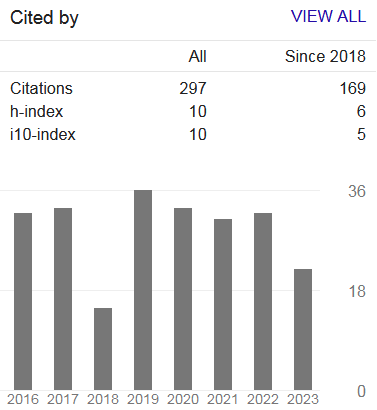
 Citation count:
  Google h-index:
  Downloads: