
A SEMI-ANALYTICAL APPROACH FOR MAGNETOHYDRODYNAMIC NANOFLUID FLOW OVER A POROUS WEDGE WITH VARIABLE VISCOSITY AND CONVECTIVE BOUNDARY CONDITION
Keywords:
nanofluid, variable viscosity, magnetohydrodynamics, convective boundary condition, differential transform methodDOI:
https://doi.org/10.17654/0973468625010Abstract
This study applies the Adaptive Multi-step Differential Transform Method (AMsDTM) to analyze magnetohydrodynamic (MHD) boundary layer flow and heat transfer of an $\mathrm{Al_2O_3}$-water nanofluid over a porous wedge with variable viscosity under a convective surface boundary condition. Using similarity transformations, the governing nonlinear partial differential equations are reduced to ordinary differential equations, which are then solved approximately through AMsDTM coupled with Newton’s iteration. The effects of the variable viscosity parameter, magnetic field strength, Biot number, buoyancy parameter, nanoparticle volume fraction, and suction parameter on the velocity and temperature profiles are examined in detail. Results are illustrated graphically to demonstrate the influence of these parameters on the flow and thermal fields. A comparison with existing numerical findings shows excellent agreement, confirming the accuracy and robustness of the present method.
Received: August 3, 2025
Accepted: September 16, 2025
References
[1] J. K. Zhou, Differential Transformation and its Applications for Electrical Circuits, Huazhong University Press, Wuhan, 1986 (in Chinese).
[2] Z. Odibat, Differential transform method for solving Volterra integral equation with separable kernels, Math. Comput. Model. 48 (2008), 1144-1146.
[3] M. Thongmoon and S. Pusjuso, The numerical solutions of differential transform method and the Laplace transform method for a system of differential equations, Nonlinear Anal: Hybrid Syst. 4(3) (2010), 425-431.
[4] S. H. Hashemi Mehne, Differential transform method: a comprehensive review and analysis, Iranian Journal of Numerical Analysis and Optimization 12(3(Special Issue)) (2022), 629-657. DOI:10.22067/ijnao.2022.77130.1153.
[5] M. M. Rashidi, N. Laraqi and S. M. Sadri, A novel analytical solution of mixed convection about an inclined flat plate embedded in a porous medium using the DTM-Pade, Int. J. Thermal Sci. 49 (2010), 2405-2412.
[6] Z. M. Odibat, C. Bertelle, M. A. Aziz-Alaoui and G. H. E. Duchamp, A multi-step differential transform method and application to non-chaotic or chaotic systems, Comput. Math. Appl. 59 (2010), 1462-1472.
[7] M. Keimanesh, M. M. Rashidi, A. J. Chamkha and R. Jafari, Study of a third grade non-Newtonian fluid flow between two parallel plates using the multi-step differential transform method, Comput. Math. Appl. 62 (2011), 2871-2891.
[8] V. S. Erturk, Z. M. Odibat and S. Momani, The multi-step differential transform method and its application to determine the solutions of non-linear oscillators, Adv. Appl. Math. Mech. 4 (2012), 422-438.
[9] E. R. El-Zahar, Applications of adaptive multi step differential transform method to singular perturbation problems arising in science and engineering, Appl. Math. Inf. Sci. 9(1) (2015), 223-232.
[10] A. Gokdogan, M. Merdan and A. Yildirim, Adaptive multi-step differential transformation method to solve ODE systems, Math. Comput. Kuwait J. Sci. 40(1) (2013), 35-55.
[11] N. H. Aljahdaly, Abrar A. Alharbi and R. A. Alharbey, Solution of non-autonomous Bloch equation via multistage differential transformation method, Contemporary Mathematics 5(4) (2024), 6056-6066.
[12] A. R. F. Sabdin, C. H. C. Hussin, J. Sulaiman, A. Mandangan and E. R. El-Zahar, Adaptive hybrid reduced differential transform method in solving nonlinear Schrödinger equations, J. Adv. Res. Des. 129(1) (2025), 33-45.
[13] V. M. Falkner and S. W. Skan, Some approximate solutions of the boundary layer equations, Philos. Mag. 12 (1931), 865-896.
[14] K. A. Yih, Uniform suction/blowing effect on force convection about a wedge: uniform heat flux, Acta Mech. 128 (1998), 173-181.
[15] N. Afzal, Falkner-Skan equation for flow past a stretching surface with suction or blowing, analytical solutions, Appl. Math. Comput. 217 (2010), 2724-2736.
[16] A. Postelnicu and I. Pop, Falkner-Skan boundary layer flow of a power-law fluid past a stretching wedge, Appl. Math. Comput. 217 (2011), 4359-4368.
[17] M. Turkyilmazoglu, Slip flow and heat transfer over a specific wedge: an exactly solvable Falkner-Skan equation, J. Eng. Math. 92(1) (2015), 73-81.
[18] S. R. Joshi, S. R. Kirsur and A. L. Nargund, Analytical and numerical solutions for the boundary layer flow and heat transfer over a moving wedge in Casson fluid, Stud. Appl. Math. 153(2) (2024), e12727.
[19] S. S. R. Raju, R. L. V. Renuka Devi, K. K. Asogwa, S. S. K. Raju, C. S. K. Raju, G. Kathyayani and N. Siva Kumar, Falkner-Skan slip flow of non-Newtonian fluid over a moving and nonlinearly radiated wedge with variable heat source/sink and viscous dissipation, Int. J. Mod. Phys. B 38(01) (2024), 2450004.
[20] S. U. S. Choi, Enhancing thermal conductivity of fluids with nanoparticles, The Proceedings of the 1995 ASME International Mechanical Engineering Congress and Exposition, San Francisco, USA, ASME, FED 231/MD 66 (1995), 99-105.
[21] S. K. Das, S. U. S. Choi, W. Yu and T. Pradeep, Nanofluids: Science and Technology, Wiley, Hoboken, 2008.
[22] N. A. Yacob, A. Ishak and I. Pop, Falkner-Skan problem for a static or moving wedge in nanofluids, Int. J. Therm. Sci. 50 (2011), 133-139.
[23] A. Bhatti, M. Mustafa and T. Rafiq, Falkner-Skan flow of nanofluid past a static wedge with partial slip conditions using different models, Int. Commu. Heat Mass Transf. 129 (2021), 105690.
[24] M. Yaseen, S. K. Rawat and M. Kumar, Falkner-Skan problem for a stretching or shrinking wedge with nanoparticle aggregation, J. Heat Transf. 144(10) (2022), 102501.
[25] S. K. Rawat, M. Yaseen, U. Khan, M. Kumar, A. Abdulrahman, S. M. Eldin, S. Elattar, A. M. Abed and A. M. Galal, Insight into the significance of nanoparticle aggregation and non-uniform heat source/sink on titania-ethylene glycol nanofuid flow over a wedge, Arab. J. Chem. 16(7) (2023), 104809.
[26] U. Farooq, Y. L. Zhao, T. Hayat, A. Alsaedi and S. J. Liao, Application of the HAM-based Mathematica package BVPh 2.0 on MHD Falkner-Skan flow of nanofluid, Computers and Fluids 111 (2015), 69-75.
[27] M. G. Reddy and K. Ramesh, Nonlinear radiative Falkner-Skan flow of hydromagnetic nanofluid over a wedge with Arrhenius activation energy, Math. Model. Fluid Dyn. Nanofluid (2023), 475-494.
https://doi.org/10.1201/978100329960828.
[28] A. K. A. Jawwad, A. B. Ali, A. Divya, N. S. S. Singh, M. Jawad, H. A. Garalleh and I. Mahariq, Magnetohydrodynamic control of Falkner-Skan nanofluid transport around a Wedge-shaped geometry for advanced thermal solutions: applications in medical skin patches, Results Eng. 27 (2025), 106420.
[29] A. Chakraborty and P. Janapatla, Flow optimization for a MHD radiative nanofluid across a moving vertical wedge with nanoparticle-aggregation effect: data prediction and response optimization, Mechanics of Time-Dependent Materials 29(3) (2025), 67.
[30] N. A. Zainal, I. Waini, N. S. Khashi’ie, R. Nazar and I. Pop, MHD hybrid nanofluid flow past a stretching/shrinking wedge with heat generation/absorption impact, CFD Lett. 16(6) (2024), 146-156.
[31] G. Sowmya, K. Vajravelu and S. Sindhu, Magnetized hybrid nanofluid flow across a wedge: A computational three-dimensional study, Num. Heat Transf. Part A: Appl. 86(18) (2025), 6441-6461.
[32] A. Hafeez, D. Liu and A. Khalid, MHD flow of radiative hybrid nanofluid across a wedge influenced by melting heat transfer: Engineering application, Alex. Eng. J. 122 (2025), 18-27.
[33] A. S. Alshehry, S. Noor, S. A. Abas, M. Fiza and H. Ullah, Analysis of MHD hybrid nanofluid flow over cone and wedge with exponential and thermal heat source and activation energy, Open Phys. 23(1) (2025), 20250194.
[34] Y. Ouyang, M. F. Md Basir, K. Naganthran and I. Pop, Unsteady magnetohydrodynamic tri-hybrid nanofluid flow past a moving wedge with viscous dissipation and Joule heating, Phys. Fluids 36(6) (2024), 062009.
[35] N. A. Yacob, A. Ishak, I. Pop and K. Vajravelu, Boundary layer flow past a stretching/shrinking surface beneath an external uniform shear flow with a convective surface boundary condition in a nanofluid, Nanoscale Res. Lett. 6 (2011), 1-7.
[36] O. D. Makinde and A. Aziz, Boundary layer flow of a nanofluid past a stretching sheet with a convective boundary condition, Int. J. Therm. Sci. 50 (2011), 1326-1332.
[37] N. S. Akbar, S. Nadeem, R. Ul Haq and Z. H. Khan, Radiation effects on MHD stagnation point flow of nano fluid towards a stretching surface with convective boundary condition, Chin. J. Aeronaut. 26 (2013), 1389-1397.
[38] T. Hayat, M. Imtiaz, A. Alsaedi and R. Mansoor, MHD flow of nanofluids over an exponentially stretching sheet in a porous medium with convective boundary conditions, Chin. Phys. B 23 (2014), 054701.
[39] J. C. Umavathi and M. D. Shamshuddin, Computational micropolar model of hybrid nanofluid flow across a wedge, Nume. Heat Transf. Part A: Appl. (2024), 1-17. https://doi.org/10.1080/10407782.2024.2368273.
[40] K. Vajravelu, K. V. Prasad and C.-O. Ng, The effect of variable viscosity on the flow and heat transfer of a viscous Ag-water and Cu-water nanofluids, J. Hydrodyn. 25 (2013), 1-9.
[41] R. K. Deka, M. Basumatary and A. Paul, Effect of variable viscosity on a nanofluid over a porous wedge, Int. J. Fluid Mech. Research 45(4) (2018), 355-368.
[42] Z. A. Alhussain and A. Tassaddiq, Thin film blood based Casson hybrid nanofluid flow with variable viscosity, Arabian J. Sci. Eng. 47 (1) (2022), 1087-1094.
[43] S. Abdal and C. Chukwu, Significance of variable viscosity for time-dependent flow of hybrid nanofluids due to spinning surface, Alex. Eng. J. 71 (2023), 551-563.
[44] M. Ramzan and H. Alotaibi, Variable viscosity effects on the flow of MHD hybrid nanofluid containing dust particles over a needle with Hall current - a Xue model exploration, Commun. Theor. Phys. 74(5) (2022), 055801.
[45] M. M. Rahman, M.A. Al-Lawatia, I. A. Eltayeb and N. Al-Salti, Hydromagnetic slip flow of water based nanofluids past a wedge with convective surface in the presence of heat generation (or) absorption, Int. J. Therm. Sci. 57 (2012), 172-182.
[46] H. F. Oztop and E. Abu-Nada, Numerical study of natural convection in partially heated rectangular enclosures filled with nanofluids, Int. J. Heat Fluid Flow 29 (2008), 1326e1336.
[47] S. Khalil, T. Abbas and R. Nawaz, Enhanced thermal and flow behavior of water hybrid nanofluids in porous media under variable magnetic field conditions, Int. J. Thermofluids 27 (2025), 101166.
[48] M. M. Rahman and I. A. Eltayeb, Convective slip flow of rarefied fluids over a wedge with thermal jump and variable transport properties, Int. J. Therm. Sci. 50 (2011), 468-479.
Downloads
Published
Issue
Section
License
Copyright (c) 2025 PUSHPA PUBLISHING HOUSE, PRAYAGRAJ, INDIA

This work is licensed under a Creative Commons Attribution 4.0 International License.
_________________________
Attribution: Credit Pusha Publishing House as the original publisher, including title and author(s) if applicable.
Non-Commercial Use: For non-commercial purposes only. No commercial activities without explicit permission.
No Derivatives: Modifying or creating derivative works not allowed without written permission.
Contact Pusha Publishing House for more info or permissions.





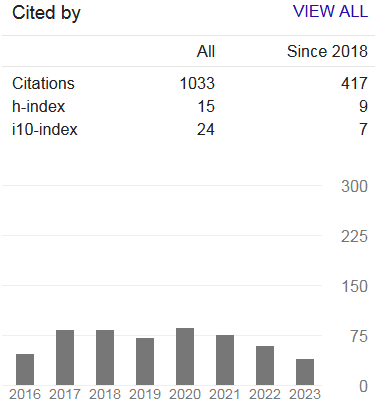
 Citation count:
  Google h-index:
  Downloads: