
FUZZY MODEL USING BERNSTEIN NEURAL NETWORK IN AN UNCERTAIN NON-LINEAR DIFFERENTIAL EQUATION
Keywords:
BNN, bisection method, harmonic Newton’s method, fuzzy model, non-linear differential equations.DOI:
https://doi.org/10.17654/0973421X23001Abstract
Nonlinear systems can also be simulated using fuzzy models, differential equations, and algebraic systems. Fuzzy systems are excellent models for uncertainty of nonlinear systems because nonlinear systems uncertainties can be converted into the fuzzy set concept. Fuzzy models employ many linear piecewise systems to approximate nonlinear systems with fuzzier outcomes. The fuzzy polynomial is an extended version of the fuzzy equation. The fuzzy equations are simpler to use than the standard fuzzy systems. There are a variety of ways to build fuzzy equations such as an interpolation technique, an iterative approach, and a Runge-Kutta technique that can be used to extract the statistical solution connected with fuzzy equations. In this work, it is studied that the previous research used fuzzy equations with Z-number coefficients to represent nonlinear systems with unknown parameters. A fuzzy model is suggested using Bernstein Neural Network (BNN) in uncertain non-linear differential equation in this research. The two methods bisection method and harmonic Newton’s method are used to solve the uncertain non-linear differential equations. Few non-linear differential equations are used in the work to acquire findings. The results reveal that the bisection method produces accurate roots that are approximately zero.
Received: September 29, 2022
Accepted: December 20, 2022
References
Yang, Gengjiao, Fei Hao, Lin Zhang and Bohu Li, Exponential stability of discrete-time positive switched TS fuzzy systems with all unstable subsystems, Science China Information Sciences 64 (2021), 1-3.
Kwang Y. Lee and Mohamed A. El-Sharkawi, eds., Modern Heuristic Optimization Techniques: Theory and Applications to Power Systems, Vol. 39, John Wiley & Sons, 2008.
M. Chehlabi and Tofigh Allahviranloo, Positive or negative solutions to first-order fully fuzzy linear differential equations under generalized differentiability, Applied Soft Computing 70 (2018), 359-370.
M. B. Ahmadi, N. A. Kiani and N. Mikaeilvand, Laplace transform formula on fuzzy nth-order derivative and its application in fuzzy ordinary differential equations, Soft Comput. 18 (2014), 2461-2469.
Muhammad Asif Zahoor Raja, Jabran Mehmood, Zulqurnain Sabir, A. Kazemi Nasab and Muhammad Anwaar Manzar, Numerical solution of doubly singular nonlinear systems using neural networks-based integrated intelligent computing, Neural Computing and Applications 31(3) (2019), 793-812.
S. Agatonovic-Kustrin and R. Beresford, Basic concepts of artificial neural network (ANN) modeling and its application in pharmaceutical research, Journal of Pharmaceutical and Biomedical Analysis 22 (2000), 717-727.
Ricardo Almeida and Delfim FM Torres, Necessary and sufficient conditions for the fractional calculus of variations with Caputo derivatives, Communications in Nonlinear Science and Numerical Simulation 16(3) (2011), 1490-1500.
Milan R. Rapaic and Alessandro Pisano, Variable-order fractional operators for adaptive order and parameter estimation, IEEE Transactions on Automatic Control 59(3) (2013), 798-803.
Andrzej Dzielinski and Dominik Sierociuk, Observer for discrete fractional order state-space systems, IFAC Proceedings 39(11) (2006), 511-516.
M. Tavassoli Kajani, B. Asady and A. Hadi Vencheh, An iterative method for solving dual fuzzy nonlinear equations, Applied Mathematics and Computation 167(1) (2005), 316-323.
Mohammed Yusuf Waziri and Zanariah Abdul Majid, A new approach for solving dual fuzzy nonlinear equations using Broyden’s and Newton’s methods, Advances in Fuzzy Systems 2012 (2012).
S. Pederson and M. Sambandham, The Runge-Kutta method for hybrid fuzzy differential equations, Nonlinear Analysis: Hybrid Systems 2(2) (2008), 626-634.
Hongli Sun, Muzhou Hou, Yunlei Yang, Tianle Zhang, Futian Weng and Feng Han, Solving partial differential equation based on Bernstein neural network and extreme learning machine algorithm, Neural Processing Letters 50(2) (2019), 1153-1172.
Gholamreza Nassajian and Saeed Balochian, Optimal Control Based on Neuro Estimator for Fractional Order Uncertain Non-linear Continuous-time Systems, Neural Processing Letters 52(1) (2020), 221-240.
Alexander Gegov and Wen Yu, Fuzzy control of uncertain nonlinear systems with numerical techniques: a survey, In UK Workshop on Computational Intelligence, Springer, Cham, 2019, pp. 3-14.
Raheleh Jafari, Sina Razvarz and Alexander Gegov, Fuzzy differential equations for modeling and control of fuzzy systems, In International Conference on Theory and Applications of Fuzzy Systems and Soft Computing, Springer, Cham, 2018, pp. 732 740.
Sina Razvarz, Raheleh Jafari, Alexander Gegov and Satyam Paul, Fuzzy modeling for uncertain nonlinear systems using fuzzy equations and Z-numbers, In UK Workshop on Computational Intelligence, Springer, Cham, 2018, pp. 96-107.
Wen Yu, Sina Razvarz and Raheleh Jafari, Numerical solution of fuzzy differential equations with Z-numbers using fuzzy Sumudu transforms, Advances in Science, Technology and Engineering Systems 3(1) (2018), 66-75.
Sina Razvarz and Mohammad Tahmasbi, Fuzzy equations and Z-numbers for nonlinear systems control, Procedia Computer Science 120 (2017), 923-930.
Okorie Charity Ebelechukwu, Ben Obakpo Johnson, Ali Inalegwu Michael and Akuji Terhemba Fidelis, Comparison of some iterative methods of solving nonlinear equations, International Journal of Theoretical and Applied Mathematics 4(2) (2018), 22.
Javad Shokri, Numerical method for solving fuzzy nonlinear equations, Applied Mathematical Sciences 2(24) (2008), 1191-1203.
Downloads
Published
Issue
Section
License
Copyright (c) 2023 Pushpa Publishing House, Prayagraj, India

This work is licensed under a Creative Commons Attribution-ShareAlike 4.0 International License.
_________________________
Attribution: Credit Pushpa Publishing House as the original publisher, including title and author(s) if applicable.
Non-Commercial Use: For non-commercial purposes only. No commercial activities without explicit permission.
No Derivatives: Modifying or creating derivative works not allowed without written permission.
Contact Pusha Publishing House for more info or permissions.





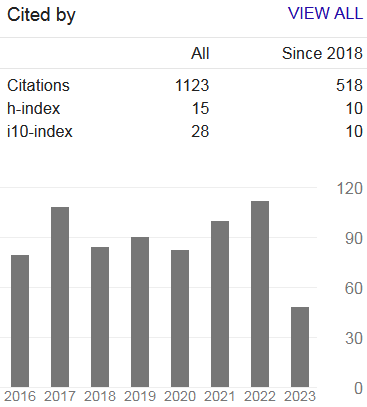
 Citation count:
  Google h-index:
  Downloads: