


.svg)






APPLICATION OF MULTISTATE MODEL IN ANALYZING HEAD AND NECK CANCER DATA
Keywords:
survival analysis, multistate model, transition probability, head and neck cancer data.DOI:
https://doi.org/10.17654/0973514322003Abstract
An important aim in cancer research is to study how treatment and prognostic factors influence the course of disease of a patient. Typically in these trials, besides overall survival, also other endpoints such as recurrence or distant metastasis are of interest. Usually, in these situations, Cox regression models are applied for each of these endpoints separately. These approaches, however, fail to give insight into what happens to a patient after the first event. The multistate models are flexible tools for analyzing time to event with multiple events. Here we used multistate models for the data of head and neck cancer with two transient states healthy, recurrence and one absorbing state death. The median survival time for these patients was 74.8 months and the 5-year survival rate was 52.3%. Based on the results of multistate model, the covariates primary site, treatment and stage of disease were affected the death hazard without recurrence and the primary site of tumor got identified as the factors affecting death hazard in patients with recurrence. This model is able to estimate the transition probabilities in different states of disease. A patient with head and neck cancer would develop recurrence with a probability of 13% within one year after completing the initial treatment.
Received: November 1, 2021
Accepted: December 18, 2021
References
O. Aalen and S. Johansen, An empirical transition matrix for non-homogeneous Markov chains based on censored observations, Scand. J. Statist. 5(3) (1978), 141-150.
A. P. Amorin, J. de Una Alveraz and L. Meira-Machado, Presmoothing the transition probabilities in the illness-death model, Statist. Probab. Lett. 81(7) (2011), 797-806.
Balakrishna B. Yeole, Rengaswamy Sankaranarayanan, Lizzy Sunny, R. Swaminathan and D. M. Parkin, Survival from head and neck cancer in Mumbai, Cancer 89(2) (2000), 437-444.
G. Cadoni et al., Prognostic factors in head and neck cancer: a 10-year retrospective analysis in a single-institution in Italy, Acta Otorhinolaryngol Italica 37(6) (2017), 458-466.
Freddie Bray et al., Global Cancer Statistics 2018: GLOBOCAN estimates of incidence and mortality worldwide for 36 cancers in 185 countries, A Cancer Journal for Clinicians 68 (2018), 394-424.
G. Grover, P. K. Swain, K. Goel and V. Singh, Multistate Markov modeling for disease progression of Breast cancer patients based on CA15-3 marker, Thai. Stat. 16(2) (2018), 129-139.
Hospital Based Cancer Registry Report, Malabar Cancer Centre, Thalassery, Kerala, India, 2018.
P. Hougaard, Multi-state models: a review, Lifetime Data Anal. 5(3) (1999), 239-264.
Kowit Pruegsanusak, Sumet Peeravut, Vitoon Leelamanit and Wattana Sinkijcharoenchai, Survival and prognostic factors of different sites of head and neck cancer: an analysis from Thailand, Asian Pacific Journal of Cancer Prevention 13(3) (2012), 885-890.
T. J. Mafu, Modelling of multi-state panel data: the importance of the model assumptions, Doctors dissertation, University of Stellenbosch, Stellenbosch, 2014.
Manik Rao Kulkarni, Head and neck cancer burden in India, International Journal of Head and Neck Surgery 4 (2013), 29-35.
Y. Mazroui, S. Mathoulin Pélissier, G. MacGrogan, V. Brouste and Rondeau Rondeau, Multivariate frailty models for two types of recurrent events with a dependent terminal event: application to breast cancer data, Biomedical Journal 55(6) (2013), 866-884.
Nerina Denaro, Marco Carlo Merlano and Elvio Grazioso Russi, Follow-up in head and neck cancer: do more does it mean do better? A systematic review and our proposal based on our experience, Clinical and Experimental Otorhinolaryngology 9(4) (2016), 287-297.
H. Putter, M. Fiocco and R. B. Geskus, Tutorial in biostatistics: competing risks and multi-state models, Stat. Med. 26 (2007), 2389-2430.
H. Putter, J. van der Hage, G. H. de Bock, R. Elgalta and C. J. van de Velde, Estimation and prediction in a multistate model for breast cancer, Biomedical Journal 48(3) (2006), 366-380.
D. F. Sullivan, A single index of mortality and morbidity, HMSHA Health Reports 86 (1971), 347-354.
S. Taghipour, D. Banjevic, A. B. Miller, N. Montgomery, A. K. S. Jardine and B. J. Harvey, Parameter estimates for invasive breast cancer progression in the Canadian National Breast Screening Study, British Journal of Cancer 108 (2013), 542-548.
WHO: World Health Statistics 2018: Monitoring Health for the SDGs, World Health Organization, Geneva, Switzerland, 2018.
Downloads
Published
Issue
Section
License
Copyright (c) 2022 Pushpa Publishing House, Prayagraj, India

This work is licensed under a Creative Commons Attribution 4.0 International License.
_________________________
Attribution: Credit Pushpa Publishing House as the original publisher, including title and author(s) if applicable.
Non-Commercial Use: For non-commercial purposes only. No commercial activities without explicit permission.
No Derivatives: Modifying or creating derivative works not allowed without written permission.
Contact Puspha Publishing House for more info or permissions.

 Journal Impact Factor:


 Publication count: 330
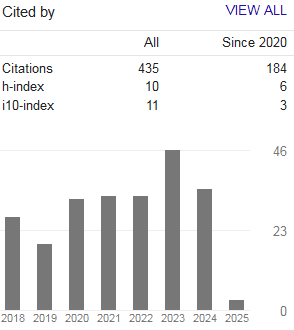
 Google h-index: 10
 Downloads: 87500+