


.svg)






MULTIPLE CO-INERTIA ANALYSIS APPLIED TO ECOLOGICAL STUDY OF ENDANGERED-MEDICINAL PLANT COMMUNITIES OF $PHELLODENDRON AMURENSE$
Keywords:
multiple co-inertia analysis, quantitative method, ordination, community-environment relationship.DOI:
https://doi.org/10.17654/0973514322014Abstract
Multivariate analysis is an important technique for ecological data process. Multiple co-inertia analysis (MCIA) combines two ordination methods for species data matrix and environmental data matrix, respectively. It is comparatively new and has not been frequently used in research practice. Here, MCIA was applied to the study of Phellodendron amurense communities in the Dongling Mountain of Beijing, North China. MCIA provided useful results in describing community-environment relations. It provided consistent results with canonical correspondence analysis (CCA) with somewhat superior in eigenvalues and percentage of interpreting variance. Elevation, slope aspect, soil depth, litter thickness, etc. were significant in affecting the endangered medicinal plant species and communities. MCIA is greatly useful in the studies of plant community-environment relationships, and has advantages in solving fuzzy and non-linear problems. It should be widely used in community ecology studies in future.
Received: February 1, 2022
Accepted: March 28, 2022
References
S. Doledec and D. Chessel, Multiple co-inertia analysis: an alternative method for studying species-environment relationships, Freshwater Biology 31 (1994), 277-294.
S. Doledec, D. Chessel and C. Gimaret-Carpentier, Niche separation in community analysis: a new method, Ecology 81 (2000), 2914-2927.
S. Dray, D. Chessel and J. Thioulouse, Multiple co-inertia analysis and the linking of ecological tables, Ecology 84(11) (2003), 3078-3089.
M. Greenacre, Fuzzy coding in constrained ordinations, Ecology 94(2) (2012), 280-286.
S. Hassani, M. Hanafi and E. Qannari, Deflation strategies for multi-block principal component analysis revisited, Chemometrics and Intelligent Laboratory Systems 120 (2013), 154-168.
R. H. Jongman C. J. F. ter Braak and O. F. R. van Tongeren, Data Analysis in Community and Landscape Ecology, Pudoc, Wageningen, 1995.
H. Kim and P. Soomin, Effects of introduced chemical groups on the dyeability of cotton fabrics with Phellodendron amurense Rupr., Dyes and Pigments 75 (2007), 351-355.
P. Legendre and E. D. Gallagher, Ecologically meaningful transformations for ordination of species data, Oecologia 129 (2001), 271-280.
J. Lepš and P. Šmilauer, Multivariate Analysis of Ecological Data Using CANOCO, Cambridge University Press, Cambridge, 2003.
C.-H. Leu, C.-Y. Li, X. Yao and T.-S. Wu, Constituents from the leaves of Phellodendron amurense and their antioxidant activity, ChemInform 38(9) (2007), 199.
J. Q. Li, Ecological Restoration of Natural Forest in the Montane Area of Beijing, Science Press, Beijing, 2008, pp. 173-176 (in Chinese).
A. Lucadamo and P. Amenta, A proposal for handling ordinal categorical variables in multiple co-inertia analysis, Journal of Applied Statistics 42 (2015), 2631-2638.
C. Meng, O. A. Zeleznik, G. G. Thallinger, B. Kuster, A. M. Gholami and A. C. Culhane, Dimension reduction techniques for the integrative analysis of multi-omics data, Briefings in Bioinformatics 17 (2016), 628-641.
S. Sadia, J.-T. Zhang, A. Tariq, X. H. Bai, A. Shedayi, K. Cao, P. Mazari, S. Aslam and L. Ahmad, Species diversity, vegetation pattern and conservation of Gentiana macrophylla Pall. communities in Dongling Mountain meadow, Beijing, China, Pakistan Journal of Botany 49(5) (2017), 1725-1734.
N. Slimani, E. E. L. Guilbert and F. Ayni, The use of STATICO and COSTATIS, two exploratory three-ways analysis methods: an application to the ecology of aquatic heteroptera in the Medjerda watershed (Tunisia), Environmental and Ecological Statistics 24 (2017), 269-295.
N. Q. Song, J.-T. Zhang and F. G. Zhao, The PCA index for measuring functional diversity and its application to Juglans mandshurica communities in the Beijing mountains, China, International Journal of Biomathematics 10(7) (2017), 1750097 (13 pp.).
C. J. F. ter Braak and P. Šmilauer, CANOCO Reference Manual and User’s Guide to Canoco for Windows, Software for Canonical Community Ordination (Version 4.5), Centre for Biometry Wageningen (Wageningen, NL) and Microcomputer Power (Ithaca NY, USA), 2002, 352 pp.
C. J. F. ter Braak, Canonical correspondence analysis: a new eigenvector technique for multivariate direct gradient analysis, Ecology 67 (1986), 1167-1179.
C. J. F. ter Braak, Interpreting canonical correlation analysis through biplots of structure correlations and weights, Psychometrika 55 (1990), 519-531.
B. Zhang, J.-T. Zhang, Suruguga, Q. D. Zhang, J. J. Cheng and S. G. Tian, A comparison of co-intertia analysis and canonical correspondence analysis in plant community ordination, Chinese Journal of Plant Ecology 33(5) (2009), 842-851.
J.-T. Zhang and D. Shao, Attributes of forest diversity in the Yunmeng Mountain National Forest Park in Beijing, China, Applied Ecology and Environmental Research 13(3) (2015), 769-782.
J-.T. Zhang, J. Xiao and L. F. Li, Variation of plant functional diversity along a disturbance gradient in mountain meadows of the Donglingshan Reserve, Beijing, China, Russian Journal of Ecology 46(2) (2015), 157-166.
J.-T. Zhang, Quantitative Ecology, 3rd ed., Science Press, Beijing, 2018 (in Chinese).
Downloads
Published
Issue
Section
License
Copyright (c) 2022 Pushpa Publishing House, Prayagraj, India

This work is licensed under a Creative Commons Attribution 4.0 International License.
_________________________
Attribution: Credit Pushpa Publishing House as the original publisher, including title and author(s) if applicable.
Non-Commercial Use: For non-commercial purposes only. No commercial activities without explicit permission.
No Derivatives: Modifying or creating derivative works not allowed without written permission.
Contact Puspha Publishing House for more info or permissions.

 Journal Impact Factor:

 Publication count: 330
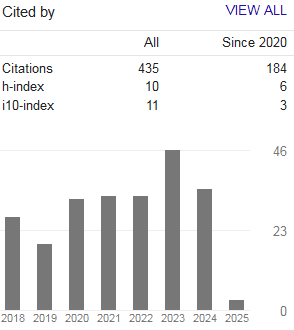
 Google h-index: 10
 Downloads: 87500+